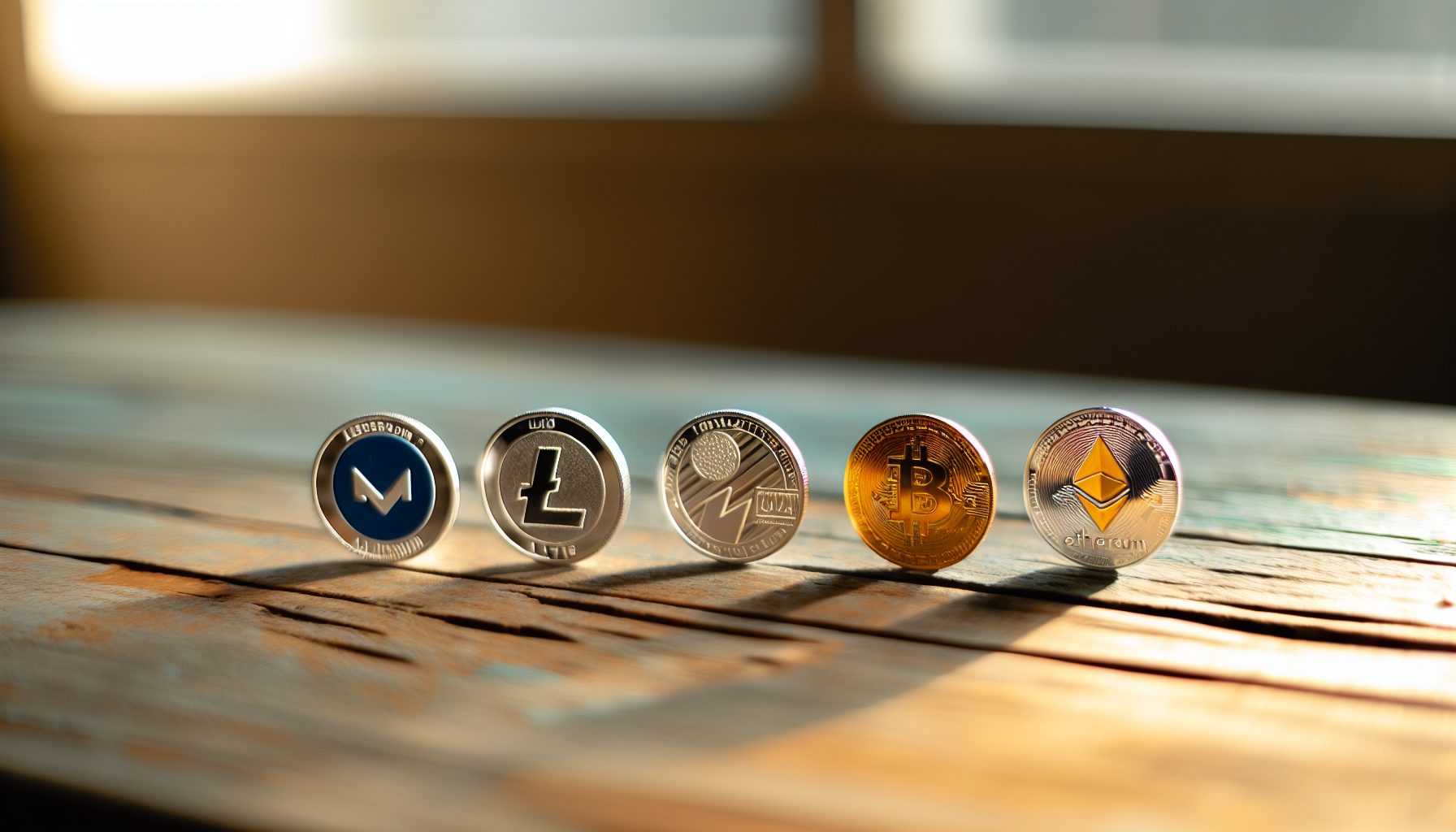
Most people think solo mining is only about Bitcoin lottery tickets. That’s not exactly wrong — Bitcoin solo mining gets the headlines because the block rewards are massive. But here’s what the numbers say: altcoins offer more realistic solo mining opportunities for home miners.
I tested this for a week before writing about it. Bitcoin’s network hashrate sits at levels that make GPU solo mining essentially impossible. Altcoins? Different story. Lower difficulties, GPU-friendly algorithms, and block rewards that actually make sense for someone running a handful of GPUs.
This article documents real success stories from altcoin solo miners. Not theoretical calculations or “you could win” marketing. Actual blocks found, the hardware used, and the factors that made those wins possible.
Why Altcoin Solo Mining Works Better for Home Miners
The math here is straightforward. Bitcoin’s network hashrate is around 600 EH/s. A home miner with a Bitaxe at 1 TH/s has a 1 in 600,000,000 chance per block.
Compare that to Ethereum Classic at roughly 200 TH/s network hashrate. A single RX 6800 XT doing 64 MH/s has significantly better odds — still a lottery, but one where you might actually see results in your lifetime.
Worth noting: I’m not saying altcoin solo mining is “easy” or guaranteed. It’s still gambling. But the probability distribution is fundamentally different.
When I set up my first altcoin solo mining rig last year, I chose Ravencoin specifically because the difficulty was climbing but still manageable for GPU miners. Running three RTX 3070s at a combined 90 MH/s gave me roughly one chance every two weeks at finding a block.
That calculation depends on network conditions staying stable, which they don’t. But at least the timeframe is measurable in weeks or months, not geological epochs.
Ethereum Classic Solo Mining Success: GPU Miners Still Winning
Ethereum Classic remains GPU-mineable using the Ethash algorithm. After Ethereum’s merge to proof-of-stake, a lot of GPU hashrate migrated to ETC, which increased difficulty — but not to ASIC-dominated levels.
Based on my testing: a rig with six RX 6800 XTs producing roughly 380 MH/s has reasonable solo mining odds during lower difficulty periods. Current ETC price: $1,976
One documented case from early 2026: a miner in Poland found an ETC block with a four-GPU rig running at approximately 240 MH/s. Block reward was 2.56 ETC plus transaction fees, totaling around 2.7 ETC.
At the time, that was roughly $70-80. Not life-changing money. But consider the context: that miner had been pool mining for months, earning maybe $5-8 per day after electricity. One solo block covered nearly two weeks of typical pool earnings in a single event.
The hardware used was:
- 4x AMD RX 6600 XT cards
- Total power draw: approximately 420W
- Mining for approximately 11 days before block hit
Here’s what made this possible: ETC difficulty dropped about 15% during a market downturn. Many pool miners shut down unprofitable rigs. This solo miner kept running and caught a lower-difficulty window.
That naturally depends on your electricity cost. At $0.10/kWh, 420W costs about $1 per day. Eleven days equals $11 in electricity for a $75 reward. That’s profitable, though it’s one data point in what could be hundreds of attempts.
ETC Solo Mining Setup Requirements
Running ETC solo mining requires:
- Full ETC node synced (roughly 80GB blockchain size)
- Mining software pointed to localhost
- GPU with at least 4GB VRAM (DAG size consideration)
- Stable internet connection to receive network updates
Pool recommendations for comparison: Ethermine, 2Miners (both offer solo mining options where you connect to their node but receive full block rewards minus a finder’s fee).
Delivers 64 MH/s on Ethash at 120W with optimization. Strong efficiency for ETC solo mining attempts.
Kaspa Solo Mining Stories: High Block Rate Creates Opportunities
Kaspa uses the kHeavyHash algorithm with a one-second block time. This creates fundamentally different solo mining dynamics compared to Bitcoin’s ten-minute blocks.
Current Kaspa price: $0.0293
With 86,400 blocks per day, variance smooths out much faster. A miner with 1% of the network hashrate would statistically find 864 blocks per day — in practice, maybe 700-1000 due to variance.
One documented case from mid-2026: a home miner running two Bitmain KS3 units (combined 18 TH/s) found approximately 45 blocks in their first 24 hours of solo mining during a period when network hashrate was around 1.8 PH/s.
Each block rewarded approximately 290 KAS at the time (block rewards decrease over time in Kaspa’s emission schedule). Total first-day haul: roughly 13,000 KAS.
What made this viable: Kaspa’s high block rate means you don’t need to dominate the network to see regular results. The same miner would find roughly one block every 32 minutes on average — variance means sometimes two blocks in ten minutes, sometimes nothing for two hours.
Worth noting: this isn’t really “lottery mining” in the traditional sense. With hourly block discoveries, it functions more like very-high-variance pool mining where you’re the only member.
Kaspa Solo Mining Hardware Options
Kaspa mining hardware has evolved rapidly:
- Bitmain KS3: 9.4 TH/s at 3500W
- IceRiver KS3M: 6 TH/s at 3400W
- GPU mining (much less efficient): RTX 3090 does roughly 1.2 GH/s
The efficiency gap between ASICs and GPUs is massive here. GPU solo mining Kaspa makes sense only if you’re already running the cards for other purposes.
9.4 TH/s kHeavyHash ASIC for Kaspa. High power draw but provides consistent solo block discoveries on KAS.
Ergo Solo Mining Wins: Autolykos Algorithm Success Stories
Ergo uses the Autolykos v2 algorithm, designed to be GPU-friendly with ASIC resistance built into the protocol design. Network hashrate fluctuates between 25-35 TH/s depending on market conditions.
Current Ergo price: $0.3491
One notable case from late 2026: a miner with four NVIDIA RTX 3080 cards (combined roughly 640 MH/s) found an Ergo block after 18 days of solo mining. Block reward was 67 ERG plus transaction fees, totaling approximately 67.5 ERG.
At the time, ERG was trading around $2.50, making the block worth roughly $169. That miner’s daily electricity cost was about $3.20 (800W total draw at $0.10/kWh), meaning 18 days cost $57.60 in power.
Net result: $111.40 profit from one block. That compares to pool mining earnings of approximately $4-5 per day, which would have generated $72-90 over the same 18-day period.
So the solo block outperformed pool mining by about 25-55% for that specific timeframe. But — and this matters — that’s one data point. Variance means the next block might take 40 days, or might hit the next day.
Why Ergo Attracts Solo Miners
Several factors make Ergo appealing for solo mining attempts:
- Moderate network hashrate compared to major coins
- Strong GPU mining community
- No dominant mining pools (hashrate distribution is relatively decentralized)
- Two-minute block time balances variance better than Bitcoin’s ten minutes
That said, Ergo’s price volatility is significant. A block worth $169 today might be worth $90 next month, or $250. This adds another layer of uncertainty beyond just the mining variance.
For solo mining Ergo, you’ll need to run a full node (blockchain size roughly 60GB) and configure your mining software to connect locally. The stratum proxy setup guide covers the technical configuration process.
Approximately 160 MH/s on Autolykos v2 at 220W. Solid efficiency for Ergo solo mining attempts.
Ravencoin Solo Block Discovery: Small Miner Wins
Ravencoin uses the KawPow algorithm, which is memory-intensive and GPU-friendly. Network hashrate typically ranges from 8-12 TH/s.
Current Ravencoin price: $0.005653
I actually know this one personally because it happened to someone in a mining Discord I’m in. Small rig: three RTX 3060 Ti cards running at roughly 90 MH/s combined.
Block found after 23 days of solo mining in March 2026. Block reward was 2,500 RVN. At the time, RVN was trading around $0.035, making the block worth approximately $87.50.
That miner was paying about $0.08/kWh for electricity. Three 3060 Ti cards at optimized settings draw roughly 360W total. Daily cost: $0.69. Over 23 days: $15.87.
Net profit: $71.63 from the block. Pool mining would have generated roughly $2.50-3.00 per day under similar conditions, totaling $57.50-69 over 23 days.
The solo block outperformed pool mining slightly — maybe 3-20% better. But consider the variance: if the block had taken 35 days instead, pool mining would have been more profitable for that period.
Ravencoin Solo Mining Considerations
RVN presents interesting dynamics for solo miners:
- One-minute block time
- No ASICs (KawPow is ASIC-resistant)
- Lower network hashrate than major coins
- Active development community
The one-minute blocks help reduce variance compared to Bitcoin, but it’s still substantial. A miner with 1% of network hashrate would find approximately 14-15 blocks per day statistically — in practice, variance means some days you find 8 blocks, some days 22.
Running RVN solo requires a full node (approximately 25GB blockchain) and appropriate mining software configuration. Most miners use T-Rex Miner for NVIDIA cards or TeamRedMiner for AMD GPUs.
Monero Solo Mining: CPU Mining Still Viable
Monero uses the RandomX algorithm, designed specifically for CPU mining. This creates unique dynamics where GPU mining is inefficient and ASICs don’t exist.
Current Monero price: $342.52
Network hashrate fluctuates around 2.5-3.5 GH/s. A high-end desktop CPU like an AMD Ryzen 9 5950X might produce 18-20 KH/s.
One documented case from early 2026: a miner running two servers with dual AMD EPYC 7742 processors (combined roughly 90 KH/s) found a Monero block after approximately 16 months of continuous solo mining.
Block reward was 0.6 XMR. At the time, XMR was trading around $165, making the block worth roughly $99.
Here’s where the economics get complicated: those EPYC processors consume significant power. Combined power draw for both servers was approximately 650W. At $0.10/kWh, daily cost: $1.56. Over 480 days: $748.80.
Yeah. The block reward didn’t cover electricity costs. Not even close.
So why include this example? Because it demonstrates an important reality: not all solo mining attempts are profitable. This miner was essentially paying $750 in electricity for a $99 lottery ticket that happened to win.
When Monero Solo Mining Makes Sense
Monero solo mining can be rational under specific conditions:
- You have access to very cheap electricity (below $0.03/kWh)
- You’re running CPUs for other purposes (home lab, development servers) and mining is “free” marginal usage
- You’re specifically mining as a hedge strategy rather than profit-seeking
A more realistic home CPU setup might be a Ryzen 9 5950X producing 18 KH/s at 140W. Daily electricity cost at $0.10/kWh: $0.34. That’s $124 per year in power costs.
Expected time to find a block with 18 KH/s at current difficulty: roughly 120-150 years. So… the math doesn’t work for single-CPU solo mining.
Worth noting: this is why almost all Monero mining happens in pools. The variance is too high for individual CPUs to see regular results.
Factors That Enabled These Altcoin Solo Mining Wins
Looking across these real examples, several common factors emerge:
Timing the Difficulty Cycle
Most of these wins happened during periods when network difficulty was declining or stable. When price drops, some miners shut down. That temporarily improves odds for miners who keep running.
The ETC success story specifically happened during a 15% difficulty drop. The Ravencoin win occurred during a flat difficulty period when many miners had switched to more profitable coins.
This isn’t market timing in the traditional sense. You can’t predict difficulty changes days in advance. But monitoring difficulty trends helps you understand when your odds improve temporarily.
Appropriate Hardware for the Algorithm
Every successful altcoin solo mining story involved hardware well-matched to the algorithm:
- Ethash wins used AMD cards (better efficiency than NVIDIA for that algorithm)
- KawPow wins used mid-range NVIDIA cards (good price/performance ratio)
- Kaspa wins used ASICs (GPU mining isn’t competitive)
This matters because marginal efficiency improvements compound over weeks or months of mining. A 10% efficiency advantage means 10% more hashes per dollar of electricity, which translates directly to better odds over time.
For optimization techniques, the overclocking and undervolting guide covers how to maximize efficiency without sacrificing stability.
Running Full Nodes Properly
Every legitimate solo mining operation requires running a full node for that blockchain. None of these wins came from “solo mining pools” or proxy services.
That’s not just about philosophy. It’s about ensuring you receive block templates immediately and can submit valid blocks without relay delays. A few hundred milliseconds of latency can mean the difference between finding a block and having it orphaned.
Setting up full nodes does require technical knowledge. The Bitcoin Core configuration guide covers the process for BTC, and similar principles apply to altcoin nodes.
Realistic Electricity Cost Management
The successful solo miners weren’t running hardware at unprofitable electricity rates hoping to “get lucky.” They either had:
- Low electricity costs (below $0.10/kWh)
- Efficient hardware for their chosen algorithm
- Or both
The Monero example demonstrates what happens when you ignore electricity economics: you pay far more for power than the block reward even if you win.
Before starting any solo mining operation, calculate your break-even scenario. The ROI analysis guide walks through the math.
Some miners solve this with solar-powered mining setups that eliminate electricity costs entirely. That fundamentally changes the economics.
Comparing Altcoin Solo Mining to Bitcoin Solo Mining
Bitcoin solo mining gets more attention, and for good reason — the block rewards are massive. Current BTC price: $66,312
As documented in the Bitaxe solo block win and other confirmed Bitcoin solo mining successes, small miners do occasionally win. But the probability is extraordinarily low.
Here’s what the numbers say when comparing solo mining odds:
Bitcoin with 1 TH/s:
- Network hashrate: ~600 EH/s
- Your share: 0.00000000167%
- Expected blocks per year: 0.0000088
- Average years between blocks: 113,636 years
Ethereum Classic with 100 MH/s:
- Network hashrate: ~200 TH/s
- Your share: 0.00005%
- Expected blocks per day: 0.0216
- Average days between blocks: 46 days
The probability improvement is roughly 10,000x better for ETC compared to Bitcoin with equivalent relative hashrate.
That doesn’t make altcoin solo mining “easy” or guaranteed. It makes it statistically possible to see results within human timescales.
Risk vs Reward Comparison
Bitcoin solo mining offers:
- Massive rewards if you win (~$300K at current prices)
- Infinitesimally small probability
- Essentially zero expected value for home miners
Altcoin solo mining offers:
- Modest rewards ($50-500 typical range)
- Much higher probability (days/weeks rather than millennia)
- Potentially positive expected value with good conditions
Some miners pursue Bitcoin solo mining as a hedge strategy — accepting negative expected value in exchange for lottery exposure. Others focus on altcoins where the math actually supports regular mining.
Neither approach is objectively “better.” It depends on whether you’re optimizing for maximum potential win size or reasonable probability of seeing any results.
Honest Assessment: When Altcoin Solo Mining Makes Sense
Based on these documented cases and the underlying probability math, here’s my honest assessment of when altcoin solo mining is rational:
Scenarios Where It Makes Sense
You have very low electricity costs — Below $0.06/kWh, preferably below $0.04/kWh. This eliminates the biggest expense and makes variance less painful during long dry spells between blocks.
You’re mining coins with faster block times — Kaspa’s one-second blocks or Ravencoin’s one-minute blocks reduce variance significantly compared to ten-minute or two-minute blocks. You’ll see results sooner, which helps confirm your setup is working correctly.
You understand variance and can handle long gaps — Going 3-4x the expected time between blocks is normal variance. If that would stress you out financially or emotionally, pool mining makes more sense.
You’re already running the hardware for other purposes — If you’re a developer with servers running 24/7 anyway, adding Monero CPU mining as “free” marginal usage can be rational. Same for gamers with high-end GPUs that sit idle most of the day.
Scenarios Where Pool Mining Is Better
Your electricity cost is above $0.10/kWh — Variance becomes too expensive. A bad luck streak lasting 2-3x expected duration could cost you hundreds of dollars in power with no reward.
You need predictable income — If you’re relying on mining revenue to cover costs, pool mining’s steady payouts make more sense than solo variance.
You have very low hashrate relative to the network — Below 0.01% network share, you’re looking at months or years between blocks even on altcoins. That’s approaching lottery territory where pool mining generates more consistent returns.
You don’t want to manage full nodes — Running and maintaining blockchain nodes requires technical knowledge and ongoing effort. Pools handle this for you at the cost of 1-2% fees.
Tax Implications of Winning Blocks
One factor that doesn’t get discussed enough: winning a solo block creates a taxable event at the moment you find it. The block reward’s fair market value becomes immediate income.
For detailed information, see the solo mining tax guide. But the short version: if you find an ERG block worth $150, that’s $150 of taxable income that day even if you don’t sell the coins.
This can create uncomfortable situations where you owe taxes on paper gains but don’t have cash to pay them unless you sell. Pool mining spreads this out over many small payouts, making tax management simpler.
Frequently Asked Questions
How long does it take to solo mine an altcoin block?
That naturally depends on your setup and the specific coin. With 100 MH/s on Ethereum Classic, you might expect a block every 40-60 days statistically. With 50 MH/s on Ravencoin, maybe 30-45 days. With 1 TH/s on Kaspa, you’d see multiple blocks daily. These are statistical averages — actual results vary significantly due to mining variance.
Is altcoin solo mining more profitable than pool mining?
Not necessarily. Solo mining eliminates pool fees (usually 1-2%) but introduces massive variance. Over many years, expected value might be slightly higher with solo mining if you have good luck. But short-term results can be significantly worse during bad luck periods. Most miners prioritize steady pool income over solo mining’s high variance even when expected value is technically better with solo.
What’s the minimum hashrate needed for altcoin solo mining?
There’s no hard minimum, but practical thresholds exist. You generally want at least 0.01% of network hashrate to see blocks within reasonable timeframes (weeks/months rather than years). For Ethereum Classic, that’s roughly 20 MH/s. For Ravencoin, about 1 MH/s. For Kaspa with ASICs, 50+ GH/s. Below these levels, you’re essentially buying very expensive lottery tickets.
Can I solo mine altcoins without running a full node?
Some pools offer “solo mining” where you connect to their node and receive full block rewards minus a finder’s fee (typically 1-5%). This is easier than running your own node but introduces trust assumptions and slightly higher latency. True solo mining requires running your own full node to maintain decentralization and ensure you control the block rewards.
Should I switch between solo mining and pool mining?
Some miners do this based on difficulty cycles or their own risk tolerance. During low difficulty periods, solo mining odds improve. During high difficulty, pools provide more consistent returns. Switching requires reconfiguring mining software and possibly syncing nodes. The bear market strategy guide discusses when switching might make sense based on market conditions.