Quick Verdict
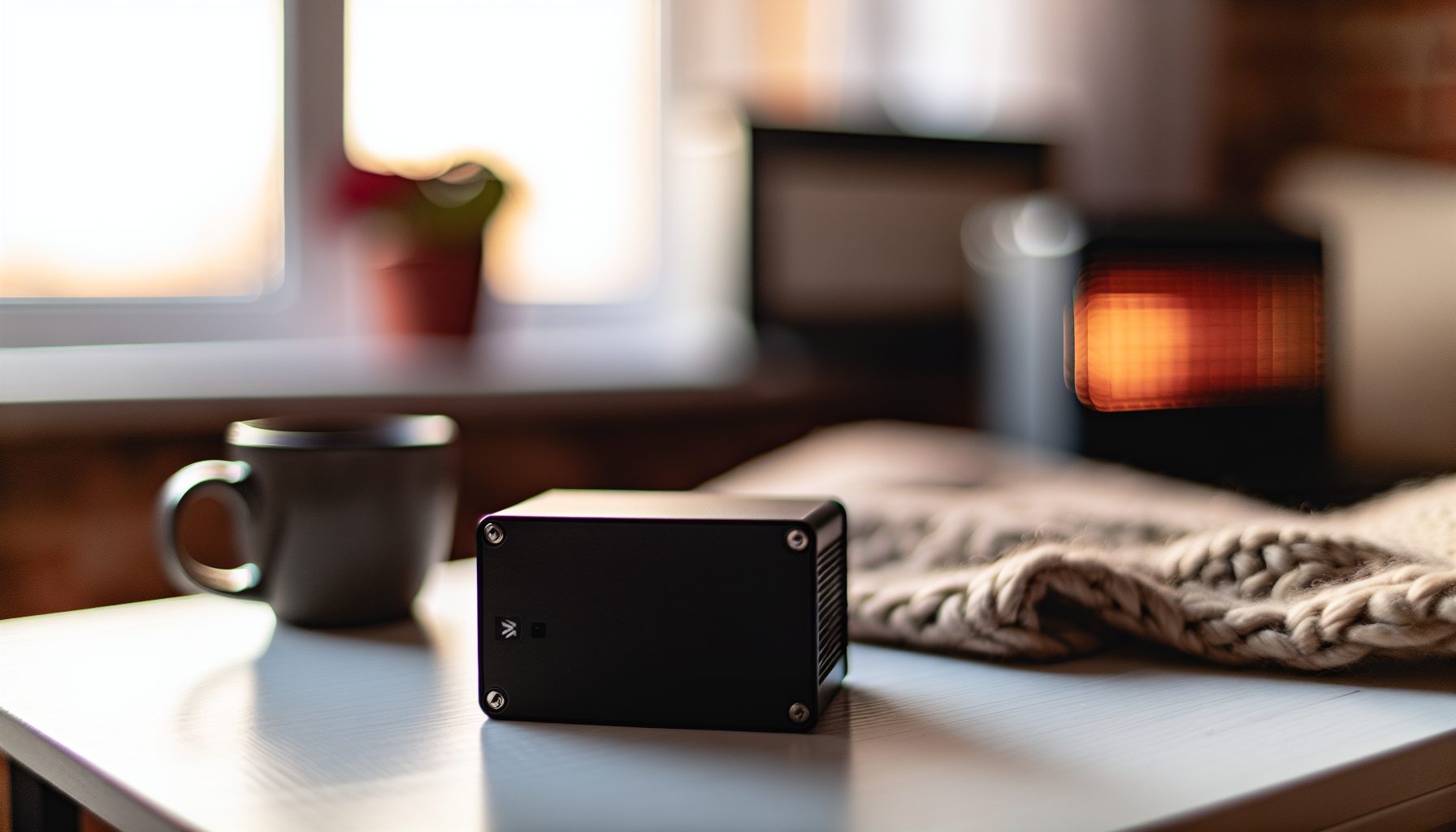
The Canaan Avalon Mini 3 is a 37.5 TH/s Bitcoin ASIC that doubles as a space heater. At 800W in full mining mode, it produces meaningful heat and meaningful hashrate. This isn’t a toy miner or a lottery device — it’s semi-professional hardware in a living-room-friendly form factor. If you’re going to run an electric heater anyway, this one pays you back in bitcoin.
At a Glance
| Spec | Value |
|---|---|
| Hashrate | 37.5 TH/s (Mining mode) |
| Algorithm | SHA-256 |
| Chips | 66x 4nm ASIC |
| Power | 800W (Mining mode) |
| Efficiency | 21.3 J/TH |
| Noise | 33–55 dB (mode dependent) |
| Connectivity | Ethernet |
| Control | Avalon Family App |
| Dimensions | 760 x 104 x 214 mm |
| Weight | 8.35 kg |
| Input Voltage | 110–240V AC |
| Price | ~$899 (MSRP) / ~$1,288 (Canaan shop) [VERIFY] |
What Is the Canaan Avalon Mini 3?
The Avalon Mini 3 is Canaan’s mid-tier home mining product, positioned between the compact Avalon Nano 3S (6 TH/s, 140W) and their industrial-grade Avalon Q series. It’s designed from the ground up as a dual-purpose device: a Bitcoin miner and an electric space heater.
Not a marketing gimmick.
An 800W device converts virtually all of its electricity into heat — thermodynamics guarantees it. Canaan designed the Mini 3 as a baseboard-style unit (760mm long, about the size of a small radiator) with directional hot-air output that can warm a medium-sized room.
The device packs 66 ASIC chips on a 4nm process, achieving 21.3 J/TH efficiency — comparable to Bitmain’s BM1368-era hardware. The whole unit is controlled through Canaan’s Avalon Family App for pool configuration, mode selection, and monitoring.
A 37.5 TH/s Bitcoin ASIC miner that doubles as a space heater with 800W power draw and four operating modes for home mining.
Operating Modes
Here’s where the Mini 3 differentiates itself from standard miners. It offers four distinct operating profiles:
| Mode | Hashrate | Power | Noise | Exhaust Temp |
|---|---|---|---|---|
| Night | ~20 TH/s | ~400W | ~33 dB | 35–40C |
| Heater (Eco) | ~25 TH/s | ~500W | ~40 dB | 43–45C |
| Heater (Super) | ~30 TH/s | ~650W | ~45 dB | 47–50C |
| Mining | 37.5 TH/s | 800W | 50–55 dB | ~55C |
Night mode is genuinely quiet at 33 dB — roughly equivalent to a whisper. You can run this in a bedroom without it disrupting sleep, though you’re trading more than half your hashrate for that silence.
Heater Eco and Super modes balance heat output against noise, giving you enough warmth for a medium-sized room while keeping the fan noise reasonable. Full Mining mode pushes maximum hashrate but runs the fans harder, hitting 55 dB — noticeable, like a conversation at normal volume, but not aggressive.
The ability to shift between modes throughout the day is the Mini 3’s killer feature. Run Mining mode while you’re out, Heater Super while you’re in the living room, and Night mode when you go to bed.
Real-World Performance
At full 37.5 TH/s, the Mini 3 accounts for roughly 0.0000000047% of the current Bitcoin network hashrate (~800+ EH/s). If you’re solo mining, your expected time to find a block is approximately 270 years. Solo mining at this hashrate remains extremely improbable — variance means you could find a block tomorrow or never. The odds improve relative to sub-1 TH/s devices, but the overwhelming likelihood is zero blocks found during the device’s operational lifetime.
For context: solo miners on CKPool running hardware in this hashrate range have found blocks. It’s rare, but it’s not theoretical — it happens multiple times per year across the solo mining community.
Most Mini 3 owners will probably join a mining pool rather than solo mine exclusively. At 37.5 TH/s and $0.10/kWh electricity, pool mining generates roughly $1-3 per day in bitcoin at current difficulty and BTC prices [VERIFY].
That doesn’t cover the electricity cost — electricity expenses at 800W typically exceed mining rewards at residential power rates, making this unprofitable as a pure mining investment. The economic argument isn’t “this will be profitable” — it’s “if I’m spending $2-3/day on electric heating anyway, I might as well get some bitcoin back.” The device works as a heat-for-bitcoin trade-off during cold months when you’d run electric heating regardless, effectively recovering a portion of your heating costs in BTC.
In colder climates where you’d run a space heater for 4-6 months per year, the Mini 3 effectively reduces your heating cost by whatever BTC it mines. During warm months, you either shut it down or accept that you’re paying full price for hashrate with no heating benefit.
Power & Electricity Costs
At full 800W draw, operating costs are meaningful:
| kWh Rate | Daily Cost | Monthly Cost |
|---|---|---|
| $0.10 | $1.92 | $57.60 |
| $0.15 | $2.88 | $86.40 |
| $0.20 | $3.84 | $115.20 |
These costs are identical to running an 800W electric space heater — because that’s exactly what this is, with the bonus of mining bitcoin. In Night mode at 400W, costs drop by half.
The math works best when: (a) you live somewhere cold for significant portions of the year; (b) you already use electric heating; and (c) your electricity rate is reasonable. If you heat with natural gas at $0.05/kWh equivalent, the Mini 3 makes less sense economically. If you already pay $0.15/kWh for electric baseboard heating, the Mini 3 is basically a direct replacement that gives you bitcoin as a rebate.
Setup & Ease of Use
The Mini 3 connects via Ethernet (not WiFi — a notable difference from most home miners). Plug in power, connect an Ethernet cable to your router, and download the Avalon Family App on your phone. The app discovers the device on your network and walks you through pool configuration.
For solo mining, point it at CKPool (solo.ckpool.org) with your wallet address. For pool mining, configure your preferred pool credentials. Mode switching happens through the app in real time — no restarts required.
Ethernet-only means you need the device within cable reach of your router (or use a powerline adapter), but the tradeoff is rock-solid stability. Dropped WiFi connections mean lost shares; Ethernet eliminates that problem. Canaan’s app also provides temperature monitoring, hashrate tracking, and error reporting. It’s proprietary software, but polished and functional.
Avalon Mini 3 vs Avalon Nano 3S
If you’ve read our Avalon Nano 3S review, you might be wondering whether the Mini 3 is worth the jump in price and power.
| Spec | Nano 3S | Mini 3 |
|---|---|---|
| Hashrate | 6 TH/s | 37.5 TH/s |
| Power | 140W | 800W |
| Efficiency | 23.3 J/TH | 21.3 J/TH |
| Noise | Near-silent | 33–55 dB |
| Weight | ~1 kg [VERIFY] | 8.35 kg |
| Size | Book-sized (205 x 115 x 58.5 mm) | Baseboard (760 x 104 x 214 mm) |
| Connectivity | WiFi | Ethernet |
| Price | ~$249 [VERIFY] | ~$899+ |
The Nano 3S is a desk accessory that happens to mine. The Mini 3 is a room heater that happens to mine. Different devices for different purposes.
The Mini 3 delivers 6.25x the hashrate at 5.7x the power draw, making it slightly more efficient per terahash. But the real question is simpler: do you need 800W of heat in your space?
Pros & Cons
Pros:
- 37.5 TH/s is serious hashrate for a home device
- Four operating modes from whisper-quiet to full performance
- Legitimate dual-use as a space heater (800W of directed heat)
- 4nm chip efficiency at 21.3 J/TH
- Polished app-based management
- Canaan is an established, publicly traded mining hardware company
Cons:
- 800W power draw is substantial — this isn’t a set-and-forget desk miner
- Ethernet only, no WiFi option
- 8.35 kg and 760mm long — this needs dedicated placement
- Not open-source firmware
- $899+ price point puts it outside impulse-buy territory
- No heating benefit during warm months — it becomes pure mining cost
- 50-55 dB at full power is audible in a quiet room
Where to Buy
Buy Canaan Avalon Mini 3 on Amazon
Secure Your Winnings
Whether you’re pool mining daily sats or holding out for a solo block worth $300K+, self-custody is non-negotiable. Get a hardware wallet before you start mining.
Ledger Nano X (~$149) — Industry standard hardware wallet with Bluetooth and native BTC support. Pairs well with the Avalon Family App workflow.
Buy Ledger Nano X
Trezor Model T (~$179) — Open-source firmware, touchscreen, and a track record of community trust. Good choice if you value transparency in your security stack.
Buy Trezor Model T
Industry-standard hardware wallet with Bluetooth connectivity and native Bitcoin support for secure self-custody of mining rewards.
Related Guides
- Best Bitcoin Solo Miners in 2026
- How to Solo Mine Bitcoin with CKPool
- Canaan Avalon Nano 3S Review
- Bitaxe Gamma 602 Review
- NerdQaxe++ Solo Miner Review