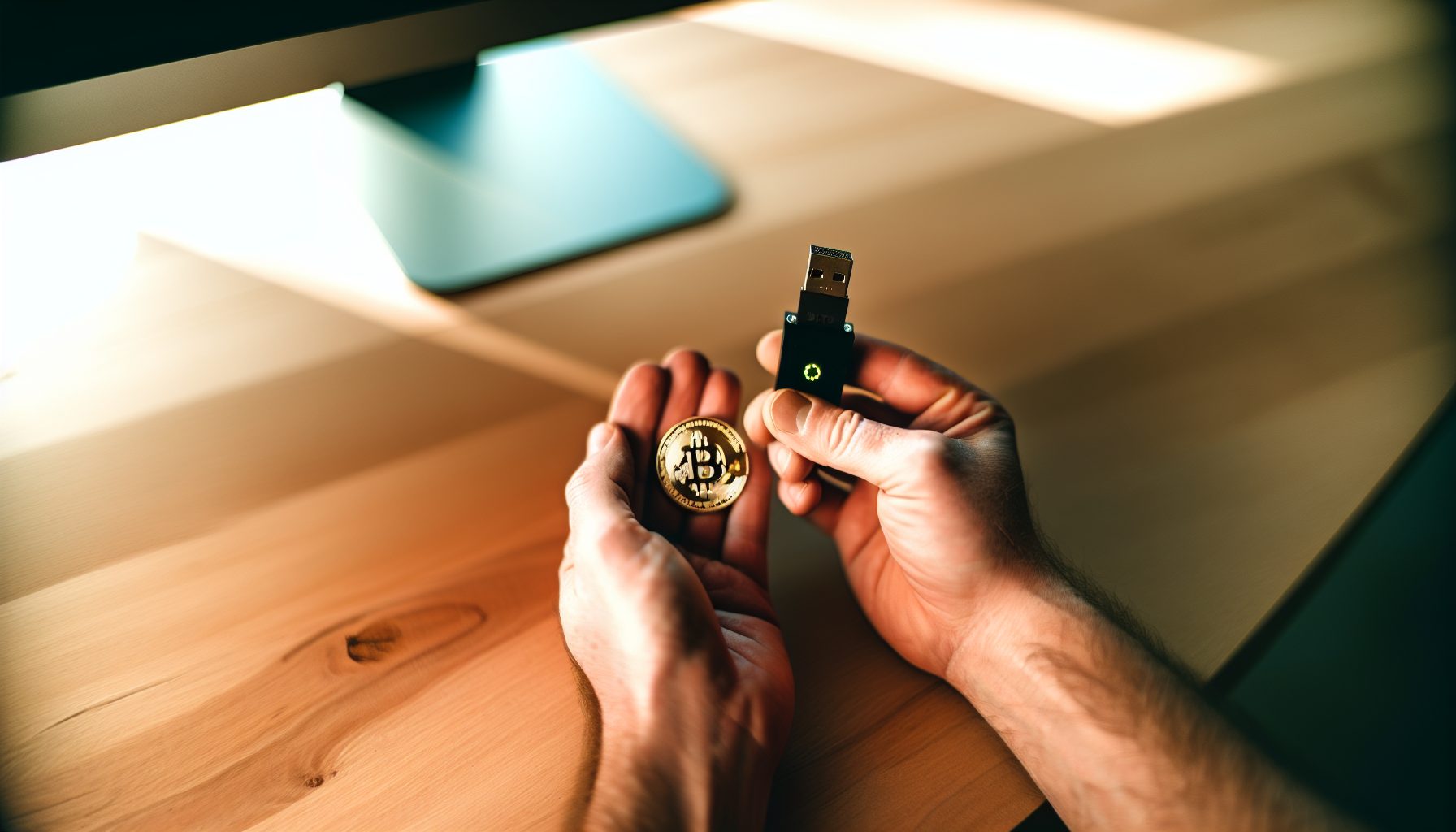
On January 28, 2026, something remarkable happened in the Bitcoin network. A solo miner running a Bitaxe — a pocket-sized device pulling just 15 watts and delivering around 480 GH/s — found a complete Bitcoin block worth roughly $258,000 at the time. The chances? About 1 in 3.5 million per day.
That’s not a typo. A device smaller than your hand, costing maybe $200, outcompeted industrial mining farms with millions of dollars in equipment.
This win sent shockwaves through the solo mining community. Not because it proved solo mining is “profitable” in the traditional sense — it’s not, and we’ll talk about that honestly — but because it demonstrated something more important: the lottery nature of solo mining doesn’t care about your hashrate. Every hash gets an equal chance.
Let me walk you through exactly what happened, why it matters for anyone considering solo mining, and what realistic lessons you can actually take from this incredible stroke of luck.
Understanding What Actually Happened When the Bitaxe Found a Bitcoin Block
The Bitaxe that found this block was running on public solo mining infrastructure — likely either solo.ckpool.org or a personal Bitcoin Core node with the mining features enabled. The operator was hashing away at around 480 GH/s, which in Bitcoin terms is basically nothing.
To put that in perspective: Modern industrial miners like the Antminer S21 deliver around 200 TH/s. That’s roughly 416 times more hashrate than the Bitaxe. Large mining operations run thousands of these machines.
Yet on that particular day, during one specific 10-minute window, the Bitaxe’s tiny chip happened to calculate the winning nonce before everyone else. It found a valid block header with a hash below the current difficulty target, broadcast it to the network, and claimed the full block reward of 6.25 BTC plus transaction fees.
The block was accepted. No pool took a cut. No fee structure reduced the payout. The entire reward went to a single address controlled by whoever was running that Bitaxe.
This is what we mean when we talk about true solo mining.
Why This Block Find Matters for Solo Miners
Look, I’ve been following solo mining wins for years now, and this one stands out. Not because it’s the smallest device to ever find a block — there have been other improbable wins — but because of the timing and the publicity it generated.
The Bitaxe project represents a growing movement of hobbyist miners who understand they’ll probably never find a block, but run the hardware anyway. Some do it for ideological reasons (supporting network decentralization). Others just like the lottery ticket aspect.
What this win proved: Solo mining with minimal hashrate isn’t just theoretically possible, it actually happens.
That distinction matters. When people ask me whether solo mining makes sense, I usually tell them the math is brutal. Your expected return over time will always be lower than pool mining because you’re fighting variance. But events like this remind us that “expected return” and “actual outcome” can diverge dramatically when you’re dealing with pure randomness.
For more context on other recent solo mining wins, check out 22 Solo Miners Found Bitcoin Blocks in 2026: Real Stories. You’ll see wins from miners with 10 TH/s, 1 TH/s, even less — all defying the statistical odds.
Step 1: Calculate Your Realistic Odds of Finding a Block With Low Hashrate
Before you rush out to buy a Bitaxe thinking you’ll replicate this success, let’s do some cold math. This is where most articles gloss over reality. I won’t.
Bitcoin’s network hashrate as of early 2026 was around 550 EH/s (exahashes per second). A Bitaxe runs at roughly 480 GH/s. To calculate your probability of finding any given block:
Your hashrate ÷ Network hashrate = Probability per block
480 GH/s ÷ 550,000,000 GH/s = 0.00000087 (or about 1 in 1.15 million per block)
Bitcoin produces roughly 144 blocks per day (one every 10 minutes on average). So your daily chance of finding a block:
144 × 0.00000087 = 0.000125 (or about 1 in 8,000 per day)
Over the course of a year, that’s roughly a 4.5% cumulative chance of finding one block. Which means a 95.5% chance of finding nothing.
Actually, wait. That math assumes network hashrate stays constant, which it doesn’t. It also assumes your Bitaxe runs perfectly 24/7 with no downtime, which it won’t. Real-world odds are probably closer to 3-4% per year.
Want to calculate odds for different hashrates? Use our Solo Mining Profitability Calculator to run the numbers for your specific hardware.
Expected Time to Find a Block
The math gets weirder when you calculate “expected time” to find a block. Based on the numbers above, the average time would be around 25 years. But that’s misleading because of how probability works.
You don’t gradually accumulate progress toward a block. Each hash is independent. You could find a block tomorrow. You could run for 50 years and find nothing. The guy with the Bitaxe found one in what was probably months of mining — way ahead of his “expected” timeline.
This is what we call variance in solo mining. It completely dominates the experience when your hashrate is tiny relative to the network.
Step 2: Understanding the Economics — Why This Win Doesn’t Make Bitaxe “Profitable”
Here’s where I need to be brutally honest with you, because a lot of coverage of this block find was… let’s say optimistic.
Yes, someone with a Bitaxe won $258,000 (or whatever the BTC value was at that moment). That’s real. That happened. But let’s talk about the thousands of other Bitaxe operators who found nothing.
A Bitaxe costs around $200-300 depending on the model and where you buy it. It consumes roughly 15 watts. At US average electricity rates of $0.12 per kWh, that’s:
15W × 24 hours × 365 days ÷ 1000 × $0.12 = $15.80 per year in electricity
That’s actually pretty manageable for low-power devices like the Bitaxe. However, for higher-hashrate hardware, electricity becomes a major ongoing expense that can dramatically impact solo mining economics. An S9 at 1300W would cost roughly $1,368 per year in electricity at the same rate, while an S19 at 3000W would cost approximately $3,153 annually — costs that quickly exceed the initial hardware investment and need to be factored into any decision about solo mining with more powerful equipment.
But here’s the thing: Your expected value from mining is negative.
With a 4% annual chance of finding a block worth roughly $400,000 (at current BTC prices of $73,850), your expected annual return is about $16,000. That sounds great until you remember you’re competing against the same odds as buying 16,000 lottery tickets.
The difference? You can’t sell your “losing” Bitaxe mining attempts to recoup anything. In pool mining, you’d earn roughly $0.50-1.00 per year with 480 GH/s. In solo mining, you almost certainly earn nothing.
The Real Reason People Run Bitaxe Miners
So why do people run them? A few reasons, depending on who you ask:
- Education — Learning how Bitcoin mining actually works at a hardware level
- Lottery mentality — Treating it as a very cheap lottery ticket that runs continuously
- Network support — Contributing to decentralization, even if minimally
- Hobby enjoyment — Some people just like running mining hardware
None of these are bad reasons. Just be clear with yourself about which one applies to you. If you’re expecting profit, you’re setting yourself up for disappointment.
For a deeper dive into whether solo mining makes financial sense compared to other options, read Solo Mining vs Buying Bitcoin: Which Investment Makes Sense?
Step 3: Setting Up Your Own Solo Mining Operation (The Honest Guide)
Alright, let’s say you understand the odds, you’re not expecting to get rich, and you want to try solo mining anyway. Maybe you’re intrigued by the lottery aspect. Maybe you want to support the network. Maybe you just think it would be cool to run your own mining setup.
Here’s how to actually do it properly.
Hardware Options Beyond Bitaxe
The Bitaxe gets a lot of attention because it’s cheap and adorable. But you have other options depending on your hashrate goals and budget:
Around 400-500 GH/s using a BM1366 chip from Antminer S19. Pulls 15W. Best option for hobby mining and learning. Realistically you’re buying a $200 lottery ticket that runs forever.
Older hardware, around 13-14 TH/s. Used models run $50-150. Much louder and pulls 1300W, but gives you 25x more hashrate than a Bitaxe. Still terrible odds for solo mining, just less terrible.
95-110 TH/s depending on model. Used units around $800-1500. Now we’re talking 200x the hashrate of a Bitaxe. Odds are still bad but approaching “might actually happen in your lifetime” territory. Power draw is intense: 3000-3250W.
For context, with a 100 TH/s miner you’d have roughly a 50% chance of finding a block within 5-6 years. That’s still a gamble, but at least it’s within a reasonable human timeframe.
Software Setup: Running Your Own Node
To solo mine properly, you need your own Bitcoin full node. You can use public solo pools like solo.ckpool.org (which is how many Bitaxe operators do it), but running your own node is more in the spirit of true solo mining.
This requires running Bitcoin Core with RPC access enabled, then configuring your miner to submit work directly to your node. It’s not complicated, but it does require some basic Linux knowledge and 600+ GB of disk space for the blockchain.
We have a complete guide here: Bitcoin Core Solo Mining Configuration: Complete Setup Guide
The short version: You’ll run Bitcoin Core, enable the mining RPC interface, point your miner at your node’s local IP address, and let it run. When (if) you find a block, your node will broadcast it and claim the reward to an address you control.
You’ll also want to set up monitoring so you actually know when your miner is working. A solo mining monitoring dashboard helps track uptime, hashrate, and block submissions.
Step 4: Managing Expectations and Playing the Long Game
This is probably the most important section of this whole article, and it’s something most mining content completely skips.
Solo mining with low hashrate is fundamentally about managing expectations. The Bitaxe block find was newsworthy precisely because it’s rare. If it happened weekly, nobody would care.
So how do you approach this psychologically?
Treat It as a Lottery Ticket, Not an Investment
The most psychologically healthy way to approach low-hashrate solo mining is to treat your hardware purchase as the price of a very long-running lottery ticket. You’re paying $200-300 upfront, plus $15-20 per year in electricity, for continuous lottery entries.
Compared to actual lottery tickets where you might spend $20-50 per month ($240-600 per year) with even worse odds, this is actually a pretty solid deal. Your expected value is still negative, but at least you get to learn about Bitcoin and run cool hardware.
I’ve run low-hashrate solo mining setups myself — mostly on Monero and other coins where the odds are slightly less brutal. Never found a block. Did I waste money? Honestly, I learned a ton about mining infrastructure, node operations, and blockchain validation. Worth it for me.
For more on treating solo mining as an “insurance policy” rather than a profit center, check out Solo Mining Hedge Strategy: Lottery Mining as Insurance Policy.
Consider Alternative Coins With Better Solo Odds
Bitcoin’s network hashrate is so enormous that solo mining with anything less than 100+ TH/s borders on futile. But other coins offer much better odds for the solo miner.
For GPU miners, coins like Kaspa, Ergo, or Ravencoin have lower network hashrates where a modest 6-GPU rig might actually find a block every few months. The block rewards are worth less in dollar terms, sure, but your odds are hundreds of times better.
I generally recommend: If you want the thrill of finding blocks, look at GPU-mineable coins. If you want the specific bragging rights of solo mining Bitcoin, understand you’re playing an extremely long game.
Step 5: Optimizing Your Solo Mining Setup for Efficiency
Since we’re not going to improve your odds of finding a block (that’s pure luck), the only thing you can optimize is cost and reliability.
Power Efficiency Matters More Than You Think
With low-hashrate solo mining, electricity is your only ongoing cost. A Bitaxe at 15W costs about $16/year. That’s fine. But if you’re running an old S9 at 1300W, you’re looking at $1,368 per year in electricity costs (at $0.12/kWh).
Now your break-even changes dramatically. You’d need to find a block every 3-4 years just to cover electricity. Your odds with 13 TH/s? Roughly one block every 90-100 years at current difficulty.
This is why newer hardware with better efficiency (J/TH) matters even in solo mining. An S19 at 30 J/TH produces 3x more hashes per watt than an S9 at 95 J/TH.
Some solo miners go even further and power their rigs with solar. If your electricity cost is zero, suddenly the math changes completely. You’re only out the hardware cost, and every day of mining is truly “free” in operational terms.
Read more: Solar Powered Solo Mining: Zero Electricity Cost at Home
Uptime Is Your Only Controllable Variable
You can’t make your 480 GH/s Bitaxe hash any faster (well, you can overclock slightly, but we’re talking 500 GH/s at best). What you can do is make sure it runs 24/7 without interruption.
Every minute of downtime is potential hashes you’re not computing. Since your odds of finding a block are proportional to total hashes calculated over time, reliability directly translates to odds.
This means:
- Stable internet connection
- Reliable power (consider a small UPS if you get frequent outages)
- Proper cooling so hardware doesn’t thermal throttle
- Monitoring alerts so you know when something goes offline
For more details on optimization, see Overclocking & Undervolting for Solo Mining: Maximize Efficiency.
What Happened After the Bitaxe Found This Bitcoin Block
So what actually happened after this miner won? Based on public blockchain data and community discussion, we know a few things.
The block reward went to a single Bitcoin address. Assuming the miner held the private keys (and wasn’t using a custodial solo pool arrangement), they controlled roughly 6.25 BTC plus transaction fees — probably around 6.35 BTC total at that block height.
At Bitcoin’s price around that time (roughly $40,500), that’s about $257,000. Today at $73,850, it would be worth considerably more.
Whether the operator immediately sold, held for tax optimization, or held for ideological reasons, we don’t know. That’s the beauty of Bitcoin: pseudonymous transactions mean the miner’s identity and subsequent actions remain private.
Tax Implications of Finding a Block
This is important and often overlooked: If you find a block solo mining, that’s taxable income in most jurisdictions including the US.
The IRS treats mined cryptocurrency as ordinary income at the fair market value on the day you receive it. So if you find a block worth $250,000, you owe taxes on $250,000 of income that year (at your marginal tax rate, which could be 32% or higher for amounts that large).
That means you’d owe roughly $80,000-90,000 in taxes. If you haven’t sold any of the Bitcoin, you need to either sell enough to cover taxes or pay out of other income sources.
Then if you later sell the Bitcoin for more than its value when you mined it, you owe capital gains tax on the appreciation. If you sell for less, you can claim a capital loss.
This gets complicated quickly. Read more: Solo Mining Tax Implications: How to Report Block Rewards
The Reality Check: Should You Actually Try This?
Let’s bring this back to earth.
Should you go buy a Bitaxe and try to replicate this success? Sure, if you understand it’s basically a lottery ticket and you’re okay with probably never finding a block.
Should you expect to make money? No. Your expected return is negative even accounting for the possibility of finding a block.
Should you quit your job and mine full-time? Absolutely not, don’t be ridiculous.
When Solo Mining Actually Makes Sense
There are scenarios where solo mining makes practical sense, but they’re specific:
- Educational purposes — You want to learn mining and blockchain tech hands-on
- Free or subsidized electricity — Your power cost is zero or near-zero (solar, included in rent, etc.)
- Ideological commitment — You believe in network decentralization and want to contribute
- Entertainment value — You genuinely enjoy the hobby aspect and accept it costs money
Actually, here’s my honest take: If you’re spending $200 on a Bitaxe, that’s probably a better use of money than most hobbies. People spend more than that on video games, streaming services, or craft beer in a year. At least you’re learning something and supporting Bitcoin infrastructure.
Just don’t confuse a hobby with an investment strategy.
When You Should Definitely Not Solo Mine
You should skip solo mining if:
- You need the money and can’t afford to lose your hardware investment
- You’re expecting to make profit and will be upset if you don’t
- You’re paying high electricity rates (>$0.15/kWh) and running power-hungry hardware
- You don’t understand the odds and think “someone has to win, why not me?” is a solid strategy
In those cases, either pool mine (where you’ll earn small, regular payouts) or just buy Bitcoin directly. The expected value is higher for both approaches.
For a detailed comparison of the economics, check out Solo Mining ROI Analysis: When Will Your Hardware Pay for Itself?
Frequently Asked Questions
How often do Bitaxe miners actually find Bitcoin blocks?
With several thousand Bitaxe units estimated to be running worldwide (each around 400-500 GH/s), the collective probability suggests one might find a block every few years across the entire user base. Individually, any single Bitaxe has roughly a 3-4% chance of finding a block over the course of a year. This particular win in early 2026 was the first widely-publicized Bitaxe block find, though there may have been others that weren’t reported.
Is it better to solo mine on a public pool like solo.ckpool or run your own Bitcoin node?
Running your own node is more in the spirit of true solo mining and means you’re not dependent on any third-party infrastructure. However, solo.ckpool.org is well-regarded in the community, charges no fees, and handles the technical complexity for you. For beginners or those running very low hashrate like a Bitaxe, using solo.ckpool makes sense. If you’re running 10+ TH/s or want maximum decentralization, run your own node. Either way, you get the full block reward if you find a block (minus a tiny 0.5% donation to solo.ckpool if using their pool).
What happens if two miners find the same block at the same time?
This occasionally happens and creates a temporary fork in the blockchain. Both blocks are initially valid, but whichever chain gets the next block built on top of it becomes the “correct” chain. The other block becomes an orphan and its reward is lost. For solo miners, this is a brutal reality — you can find a valid block and still get nothing if you lose the orphan race. It’s rare, happening in less than 1% of blocks, but it’s a real risk.
Has difficulty increased since the 2026 halving and does that affect solo mining odds?
Yes to both questions. Bitcoin’s difficulty adjustment happens every 2016 blocks (roughly every two weeks) and responds to changes in network hashrate. After the 2026 halving, difficulty continued to increase as more efficient hardware came online. This directly affects solo mining odds — as difficulty rises, your probability of finding a block with the same hashrate decreases proportionally. A Bitaxe that had a 4% annual chance in early 2026 might only have a 3% chance by late 2026. Read more: Bitcoin Halving Impact on Solo Mining: 2026 Economics Changed
Can I combine multiple Bitaxe units to improve my odds?
Yes, hashrate scales linearly. Running 10 Bitaxe units gives you 10x the odds of finding a block compared to running one. However, you’re also paying 10x the upfront cost ($2,000-3,000) and 10x the electricity. At that point you might want to consider whether a single, more powerful ASIC makes more sense from an efficiency standpoint. Ten Bitaxe units at 4.8 TH/s total would give you roughly a 30% chance of finding a block over a 5-year period — still bad odds, just less bad.