One-Sentence Definition
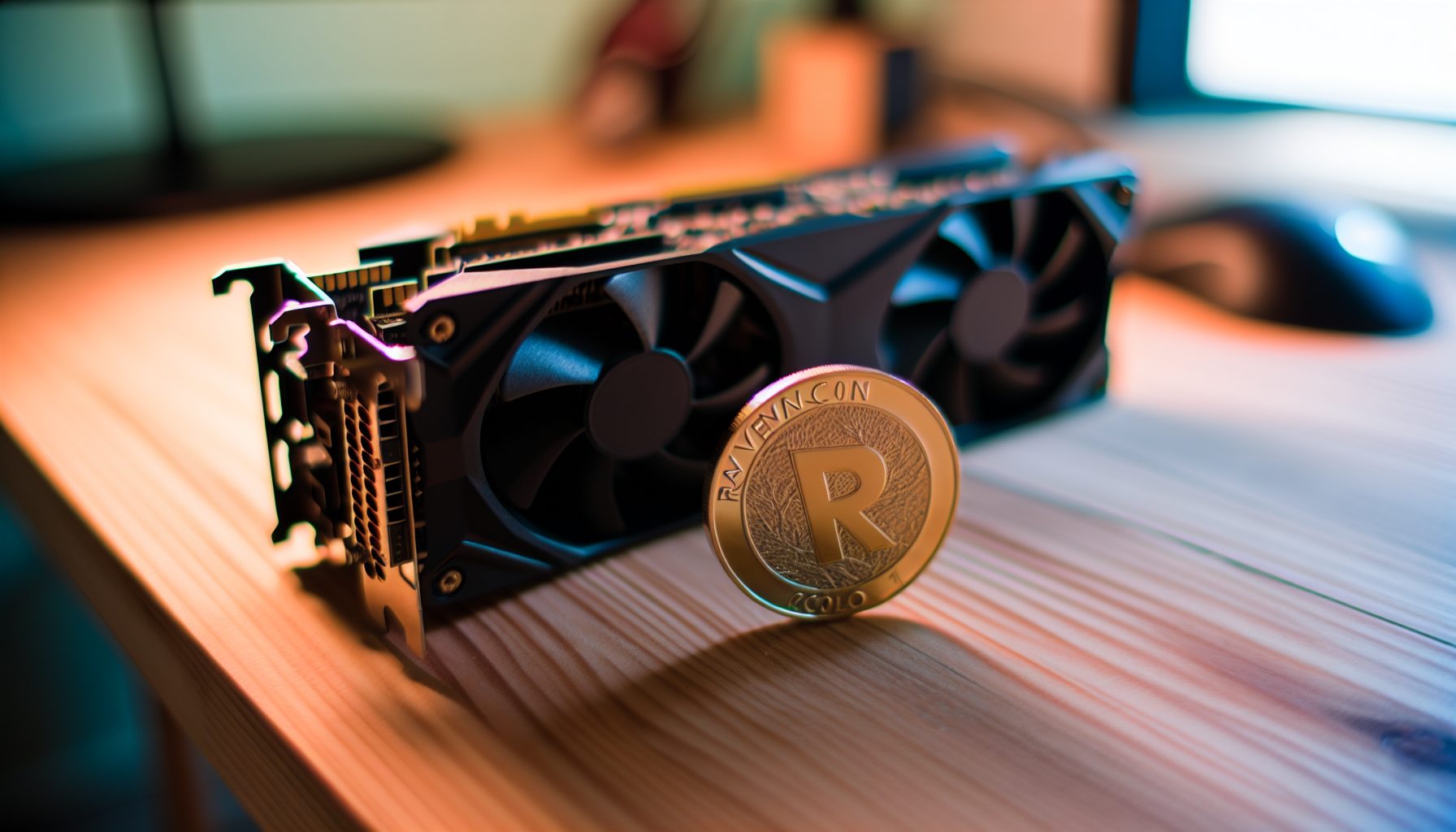
KAWPOW is a GPU mining algorithm used by Ravencoin that’s specifically designed to resist ASIC miners by constantly changing how it processes data and requiring lots of memory.
Why It Matters for Solo Mining
KAWPOW mining is actually pretty popular among solo miners because the ASIC resistance means you’re competing against other GPU miners, not massive ASIC farms. Since Ravencoin has a relatively low network hashrate compared to bigger coins, your chances of finding a block solo aren’t completely impossible—it’s still lottery mining, but the odds are more reasonable than something like Bitcoin. Plus, KAWPOW keeps all GPUs relatively competitive, so even if you don’t have the absolute newest cards, you can still participate meaningfully.
How It Works
KAWPOW stands for “KECCAK And WePOW” and it’s based on ProgPOW (Programmatic Proof-of-Work), which was originally designed for Ethereum before they switched to Proof of Stake. The algorithm randomly generates different computational programs for each block, forcing mining hardware to be flexible rather than specialized. It uses both compute-intensive operations (lots of math calculations) and memory-intensive operations (constantly reading and writing data), which plays to GPU strengths.
Like Ethash, KAWPOW uses a DAG (directed acyclic graph) that grows over time, requiring GPUs to have sufficient VRAM to hold it. Currently, you need at least 3-4GB of VRAM for kawpow mining. The algorithm changes its instructions every block, which means ASICs can’t be designed to optimize for one specific pattern—they’d need to be as flexible as a GPU, which defeats the purpose of making an ASIC in the first place.
The constant randomization also makes overclocking and undervolting settings important, since different GPU architectures handle the varying workloads differently. AMD and NVIDIA cards perform more similarly on KAWPOW than on some other algorithms.
Example
Think of KAWPOW like a teacher who gives different tests every single day—sometimes it’s math, sometimes it’s reading comprehension, sometimes it’s both mixed together. An ASIC is like a calculator that’s amazing at math but useless at reading. A GPU is like your brain—pretty good at everything, flexible enough to handle whatever test shows up. That’s why KAWPOW keeps mining accessible to regular people with gaming GPUs instead of letting specialized hardware take over.