One-Sentence Definition
Thermal throttling is when your mining hardware automatically slows down its performance to prevent overheating and potential damage from excessive heat.
Why It Matters for Solo Mining
Thermal throttling mining directly reduces your hashrate, which means fewer attempts at finding a solo block and longer expected time to block. Since solo mining is already a numbers game with high variance—and many solo miners never find a block despite continuous operation—losing even 10-20% of your hashrate to heat issues seriously hurts your already-low chances. If you’re running equipment 24/7 trying to hit that lottery, thermal throttling is basically like buying fewer lottery tickets than you paid for.
How It Works
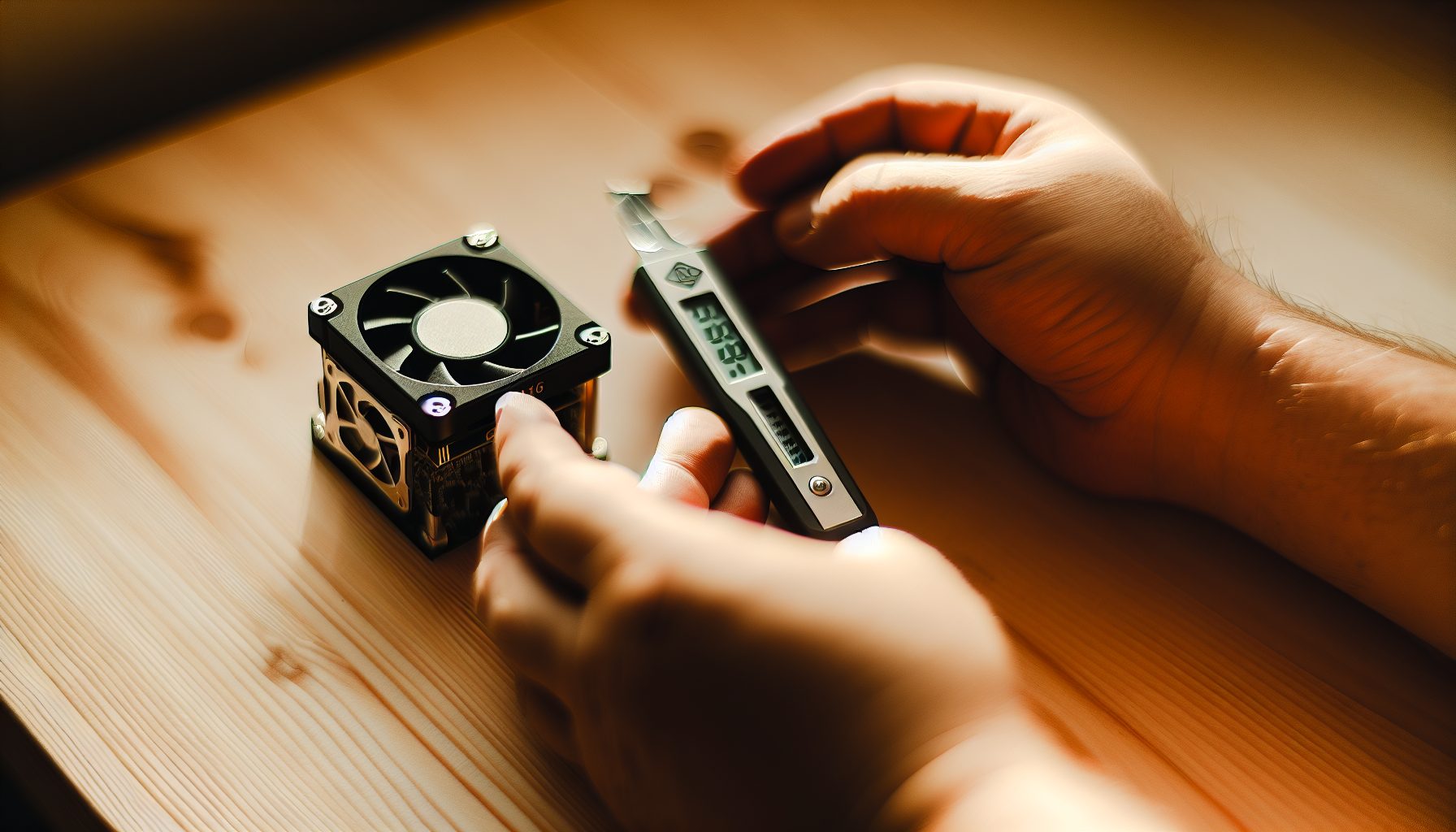
Mining ASICs and GPUs generate massive amounts of heat because they’re doing billions of calculations per second. Each chip has temperature sensors that constantly monitor how hot it’s getting. When temperatures hit a certain threshold (usually 70-90°C depending on the device), the hardware’s firmware automatically reduces clock speeds or voltage to bring temperatures back down. This is a safety feature built into almost all modern electronics—it’s better to mine slower than to literally melt your hardware. The problem is that thermal throttling can happen gradually, so you might not even notice your miner is running at 85% speed instead of 100%. Poor airflow, dusty heatsinks, high ambient temperature, or failed fans can all trigger thermal throttling during mining operations.
Example
Let’s say you’re running a NerdQaxe++ Rev 6.1 that normally does 500 GH/s. If it’s sitting in a hot room with poor ventilation and starts thermal throttling, you might only get 400 GH/s—that’s 20% of your hashing power just gone. Over months of mining, that’s potentially the difference between finding a block and finding nothing—while electricity costs continue regardless of whether you ever find a block. Some miners even put their ASICs in basements or garages during summer specifically to avoid thermal throttling mining issues that kill performance.