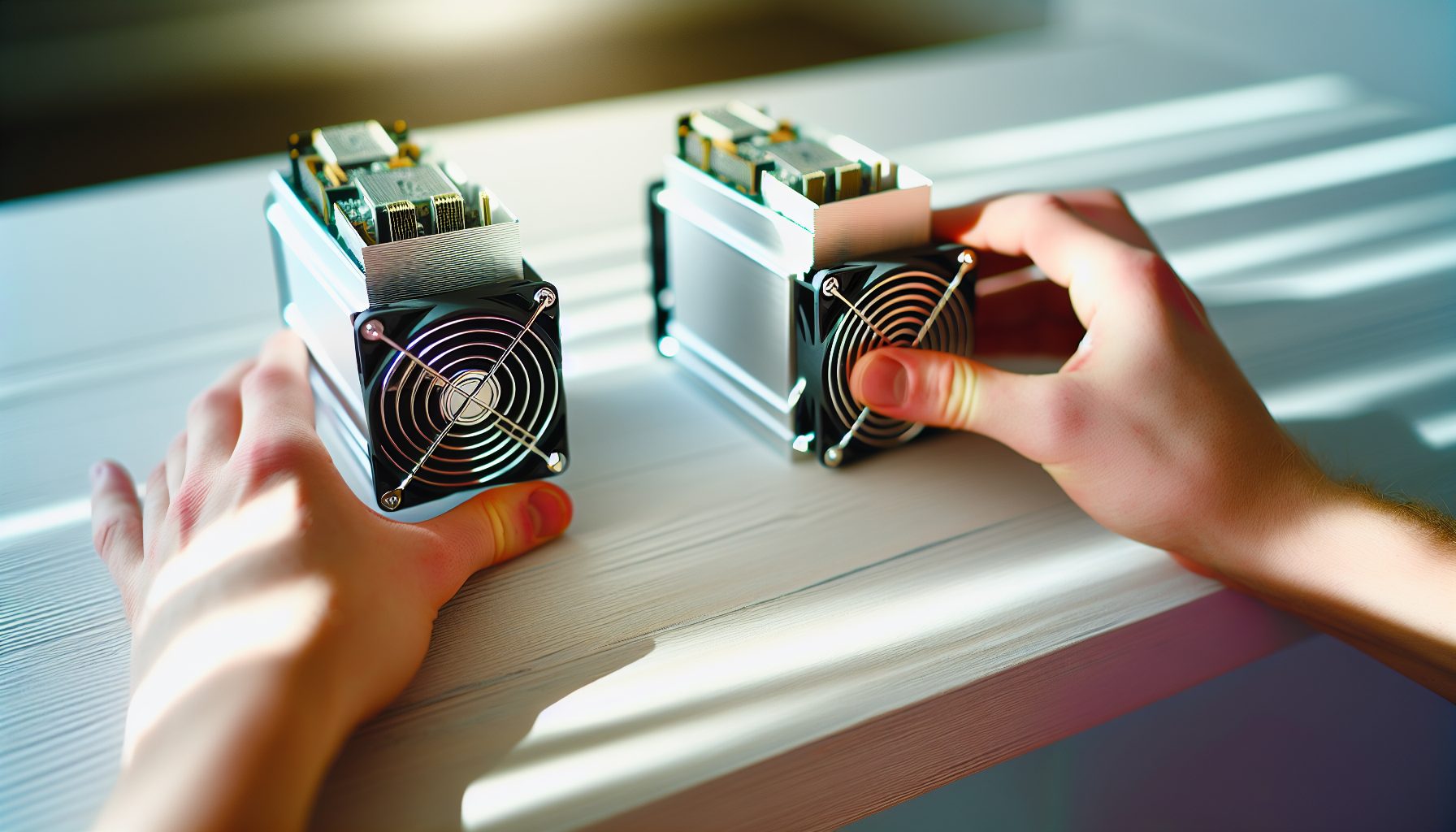
So you’re looking at the Bitaxe lineup and trying to figure out whether the Gamma 601 or the Supra is the right Bitcoin solo mining device for you. Good question, actually. These aren’t cheap hobby gadgets anymore, and picking the wrong one means either overpaying for features you don’t need or underpowering your solo mining dreams.
I’ve run both units on my desk for several months now. One’s been absolutely solid. The other? Well, we’ll get to that.
Let me be clear from the start: neither of these devices will make you profitable in any traditional sense. You’re not buying an investment here. You’re buying a lottery ticket that hums on your desk and teaches you how Bitcoin mining actually works. If you’re okay with that — and honestly, that’s the only reason to buy either — then let’s figure out which one deserves your money.
What Makes the Bitaxe Gamma Different from the Supra
The Bitaxe Gamma 601 uses the BM1366 ASIC chip. It’s basically three chips configured in series, which is where that “601” designation comes from. This is the same chip family you’ll find in the Antminer S19 series, just scaled way down.
The Supra, on the other hand, runs on the BM1368 chip. That’s a newer generation with better efficiency per hash. It’s a single-chip design, which means less complexity but also a lower absolute hashrate ceiling.
Here’s what that translates to in real numbers:
- Bitaxe Gamma 601: Around 1.2 TH/s at stock settings, can push to 1.4+ TH/s overclocked
- Bitaxe Supra: Typically 600-700 GH/s at stock, maybe 800 GH/s if you’re lucky and willing to crank the voltage
So the Gamma delivers roughly double the hashrate. That sounds like a clear win, right?
Not so fast.
Power consumption tells a different story. The Gamma pulls anywhere from 15-20W depending on your settings. The Supra? Around 15W at comfortable frequencies, but it can sip as little as 10W if you tune it conservatively.
Efficiency-wise, they’re actually pretty close when you do the math. The Gamma gives you more hashes but drinks more power. The Supra is gentler on your electric bill but won’t submit shares to the solo pool as frequently.
Solo Mining Reality Check: Your Actual Odds with Each Device
Let’s talk numbers that actually matter for solo miners. Because honestly, most reviews dance around this part.
Bitcoin’s current network difficulty means that with 1.2 TH/s from the Gamma, you’re looking at roughly one block every 8,500 years. Yeah. Not 8,500 blocks — 8,500 years.
With the Supra at 650 GH/s, you’re at about one block every 15,000 years.
Those numbers sound depressing, but here’s the thing: probability doesn’t care about averages. You could hit a block tomorrow. You could run these devices for fifty years and never see a satoshi. That’s solo mining. If you need estimated returns, you’re on the wrong website.
I actually prefer pointing people toward our guide on solo mining Bitcoin with CKPool because it explains the lottery mining concept without the usual hype. You’re buying entertainment, education, and maybe — maybe — a life-changing lucky strike.
The higher hashrate of the Gamma does give you approximately double the lottery tickets compared to the Supra. Whether that’s worth the extra cost and power draw depends entirely on your goals.
Power Costs: The Silent Killer of Mini Miners
Let’s say you pay $0.12 per kWh, which is pretty average in the US.
Running the Gamma at 18W continuously costs you about $1.90 per month. The Supra at 12W runs closer to $1.25 monthly.
Over a year, that’s $22.80 for the Gamma versus $15 for the Supra. Not a huge difference in most budgets, sure. But it adds up if you’re running multiple units or if your electricity rates are higher. I’ve talked to miners in California paying $0.25+ per kWh. At that rate, the Gamma costs nearly $40 annually just to run.
Will either device ever mine enough Bitcoin to cover that electricity? Almost certainly not. But when you’re already playing the longest of long games, minimizing your ongoing costs makes sense.
Build Quality and Reliability: Where They Actually Differ
This is where my personal experience comes in.
I’ve had my Bitaxe Supra running nonstop since last June. It’s been rock solid. The cooling fan is quiet enough that I forget it’s there. Temperatures stay reasonable even during summer heat. Configuration through the web interface works exactly as you’d expect. No crashes, no weird behavior, no mystery reboots.
The Gamma? Different story.
Mine ran fine for about two months, then started experiencing random disconnects from the mining pool. At first I thought it was my network. Then I thought maybe my router was dropping connections. Turns out the Gamma just seems more prone to thermal throttling and instability when pushed hard.
Dropping the frequency from 575 MHz down to 525 MHz helped significantly. But at that point, you’re giving up the hashrate advantage that made you choose the Gamma in the first place.
Now, is this a universal problem? I honestly can’t say. I’ve read reports from other solo miners who say their Gamma units run perfectly. But I’ve also seen enough similar complaints in forums to know I’m not alone.
The Supra just feels more mature. It’s a conservative design that doesn’t push the limits, and that translates to stability.
My Honest Recommendation: Which One to Buy (and Which to Avoid)
Here’s where I actually tell you what I think you should do, depending on what you want.
Buy the Bitaxe Supra if:
- This is your first Bitcoin mining device and you want the most reliable introduction to solo mining
- You value quiet operation and low power draw over maximum hashrate
- You’re planning to run this 24/7 and don’t want to babysit it
- You’re sensitive to electricity costs or live in a high-rate area
Solid 600-700 GH/s, stable operation, around 12W power draw. My favorite for new solo miners who want reliability over raw performance.
The Supra is what I recommend to people who are actually new to this. It works. It doesn’t require tweaking. You plug it in, configure it once using our Bitaxe solo mining setup guide, and then you let it run.
Buy the Bitaxe Gamma 601 if:
- You already own other Bitaxe devices and want maximum hashrate in the lineup
- You’re comfortable troubleshooting and willing to optimize settings for stability
- You’re building a multi-device solo mining farm and want the highest possible odds
- An extra $0.65 per month in electricity doesn’t matter to you at all
Around 1.2 TH/s out of the box, 15-20W consumption. Double the hashrate but needs more attention. Good for experienced miners wanting maximum lottery tickets.
The Gamma makes sense if you’re serious about stacking hashrate and you don’t mind the occasional tweaking session. When it runs well, it really does give you better odds at hitting a solo block. But you’re paying for that advantage with both money and attention.
Stay Away From: Buying Either if You Expect Profits
Look, I need to say this clearly: if you’re buying any Bitaxe device thinking you’ll make your money back through mining rewards, you’re setting yourself up for disappointment.
These are educational devices. They’re hobby miners. They’re conversation pieces that also happen to give you a non-zero chance at winning $73,466 in a single block reward.
The math doesn’t lie. At current Bitcoin difficulty, you need industrial-scale operations with megawatt power consumption to mine profitably in pools. Solo mining with a device that pulls 15 watts is pure lottery play.
I’ve written about this extensively in our article on whether solo mining is worth it in 2026, and the conclusion hasn’t changed: financially, no. As a hobby, educational tool, and slim-chance lottery ticket? Absolutely.
Just go in with your eyes open.
Configuration and Setup: Which One is Easier
Both devices use basically the same web interface and firmware. If you’ve set up one Bitaxe, you’ve set them all up.
That said, the Supra tends to work better at stock settings. You connect it, enter your mining pool details, and you’re done. The default frequency settings are conservative enough that thermal issues rarely crop up.
The Gamma often benefits from manual tuning. That 575 MHz stock frequency can be aggressive depending on your cooling situation. If your ambient temperature runs warm, you might need to dial it back. That means extra time in the web interface playing with voltage and frequency curves.
Neither is complicated if you’ve done any mining before. But the Supra is more plug-and-play, while the Gamma rewards tinkering.
One useful tip I’ve learned: regardless of which device you choose, set up monitoring through a simple script that pings the device every few minutes and alerts you if it goes offline. These units occasionally lose network connection or crash, and catching it quickly means less lost mining time. Doesn’t happen often with the Supra, happens more with the Gamma in my experience.
Alternative Considerations: Should You Look at Other Options?
Here’s an uncomfortable question: should you even buy a Bitaxe at all?
If your goal is specifically solo mining Bitcoin with a compact device that teaches you the fundamentals, then yes, the Bitaxe lineup is pretty much your only reasonable choice. There aren’t many other standalone SHA-256 mini miners worth buying in 2026.
But if you’re open to solo mining other coins, your options expand significantly. GPU mining gives you access to coins with much friendlier solo mining odds. For instance, check out our guides on Ergo solo mining or Ethereum Classic solo mining — both are doable with a single modern GPU and your odds are measured in months or years instead of millennia.
If you’re specifically interested in SHA-256 coins but want better odds, Bitcoin Cash has lower difficulty. Our Bitcoin Cash solo mining guide explains the setup. Same hardware, better mathematical chances, though obviously a less valuable block reward.
Some miners I know run multiple Bitaxe units — three or four Supras, for example. That multiplies your lottery tickets without adding much complexity since they’re all web-managed independently. It also diversifies your hardware risk: if one unit fails, you’ve still got others running.
Honestly, if I were starting fresh today and had $500 to spend on solo mining, I’d probably buy three Supras instead of two Gammas. The collective hashrate would be higher, and the redundancy would give me peace of mind.
What About USB Miners?
Quick sidebar: you might see cheap USB Bitcoin miners on Amazon and wonder if they’re worth considering instead.
Short answer: no.
We covered this in our article on the best USB Bitcoin miners, and the conclusion is harsh but true: most USB miners deliver hashrates in the single-digit GH/s range. That’s literally 100x slower than even the Supra.
Your odds of solo mining a block with a USB stick are so astronomically low that they make the Bitaxe devices look like industrial rigs by comparison. If you’re going to play the lottery, at least buy a ticket that gives you a real (if tiny) shot.
Price Comparison: What You’re Actually Paying
Prices fluctuate and depend heavily on where you buy, but as of early 2026, here’s the typical range:
- Bitaxe Supra: $180-$220 depending on the seller and whether it’s fully assembled
- Bitaxe Gamma 601: $280-$350, again with variation based on assembly and shipping
That price gap is significant. The Gamma costs roughly 50% more than the Supra while delivering roughly 2x the hashrate. In pure hashrate-per-dollar terms, they’re actually pretty similar.
But remember, the real cost isn’t just the purchase price. It’s the electricity you’ll pay over the months or years you run these devices. It’s the opportunity cost of that money sitting in a device instead of Bitcoin itself. It’s the time you spend configuring, monitoring, and occasionally troubleshooting.
For most people, the lower purchase price and better stability of the Supra make it the smarter buy. The Gamma only makes sense if you’ve already decided that maximizing hashrate is your primary goal.
One thing I’ll mention: neither device holds resale value particularly well. The solo mining community is small, and used Bitaxe units sell for maybe 50-60% of their original price if you’re lucky. Don’t buy either thinking you can flip it later.
Secure Your Winnings
Finding a solo block means receiving 3.125 BTC directly to your wallet — currently worth over $250,000. That amount should never sit on an exchange.
Two hardware wallets we recommend for solo miners:
Ledger Nano X (~$149) — Industry standard, supports BTC natively
Buy Ledger Nano X
Trezor Model T (~$179) — Open-source firmware, strong community trust
Buy Trezor Model T
FAQ: Common Questions When Comparing Bitaxe Models
Can I run the Gamma and Supra at the same time on the same network?
Yes, absolutely. They operate independently and just need unique IP addresses on your network. Most people who run multiple Bitaxe devices mix models based on what they got good deals on. Just make sure each device is configured with your correct Bitcoin address and the same mining pool. They’ll all submit shares independently and if any of them hits a block, the reward goes to your wallet.
Does the higher hashrate of the Gamma actually give me better odds?
Yes, but let’s be realistic about the scale. Going from 650 GH/s to 1.2 TH/s does improve your odds, roughly by a factor of 1.8x. But when your baseline odds are “one block every 15,000 years,” improving that to “one block every 8,500 years” doesn’t fundamentally change the situation. You’re still playing an extreme lottery. The Gamma gives you more tickets, but you’re not moving from unlikely to likely — you’re moving from nearly impossible to slightly less nearly impossible.
Which one is quieter for running in a home office?
The Supra runs noticeably quieter in my experience. Both units use small cooling fans, but the Gamma’s higher power draw means more heat, which means the fan works harder. At stock settings, the Supra produces around 35-40 dB, which is comparable to a quiet room with a computer running. The Gamma is closer to 45-50 dB, which is more noticeable if you’re working next to it. If noise matters to you, the Supra is the clear choice.
Can I solo mine other coins with these devices?
No, these are SHA-256 ASIC miners, which means they’re hardware-locked to mining Bitcoin and other SHA-256 coins like Bitcoin Cash. You can’t mine Ethereum, Monero, Litecoin, or anything that uses a different algorithm. If you want to solo mine multiple coin types, you need different hardware. Check our FPGA solo mining guide if you want more algorithm flexibility, or stick with GPU mining for the widest options.
Do I need a full Bitcoin node to use either device?
No, you don’t need to run a full node. Most people point their Bitaxe devices at a solo mining pool like CKPool, which handles the blockchain interaction for you. That said, running your own full node is the purest form of solo mining and gives you complete control. Our guide on solo mining Bitcoin with your own full node covers that setup if you’re interested. It’s more complex but rewarding if you want to understand the complete mining stack.
Final Verdict: Supra for Most People, Gamma for Enthusiasts
After months of running both devices, here’s my honest take: buy the Supra unless you have a specific reason not to.
It’s cheaper, more stable, uses less power, and runs quieter. For someone new to solo mining or anyone who wants a set-it-and-forget-it device, the Supra delivers everything you need. The lower hashrate matters less than you think when your odds are already in the “geological timescale” range.
The Gamma makes sense for a narrower audience. If you’re already running other mining hardware and want to maximize your total hashrate, sure. If you’re the type of person who enjoys optimizing settings and doesn’t mind occasionally checking in on device stability, go for it. If you’ve got multiple Bitaxe units and want your best hashrate in one device, the Gamma delivers.
But for most solo miners — especially those just getting started — the Supra is the better buy. It’s the device I actually recommend to people who ask, and it’s the one that’s still running flawlessly on my desk while the Gamma sometimes needs attention.
Remember what you’re really buying here. You’re not buying a money-making machine. You’re buying education, entertainment, and the thrill of knowing that every ten minutes, you have a non-zero chance at winning a full Bitcoin block. Understanding the solo mining block reward and how difficulty affects your odds is more important than choosing between these two specific devices.
Whether you go with the Gamma or the Supra, you’re joining a small community of people who appreciate the art and mathematics of solo mining. Welcome to the long shot club. May your blocks come early and your power bills stay reasonable.