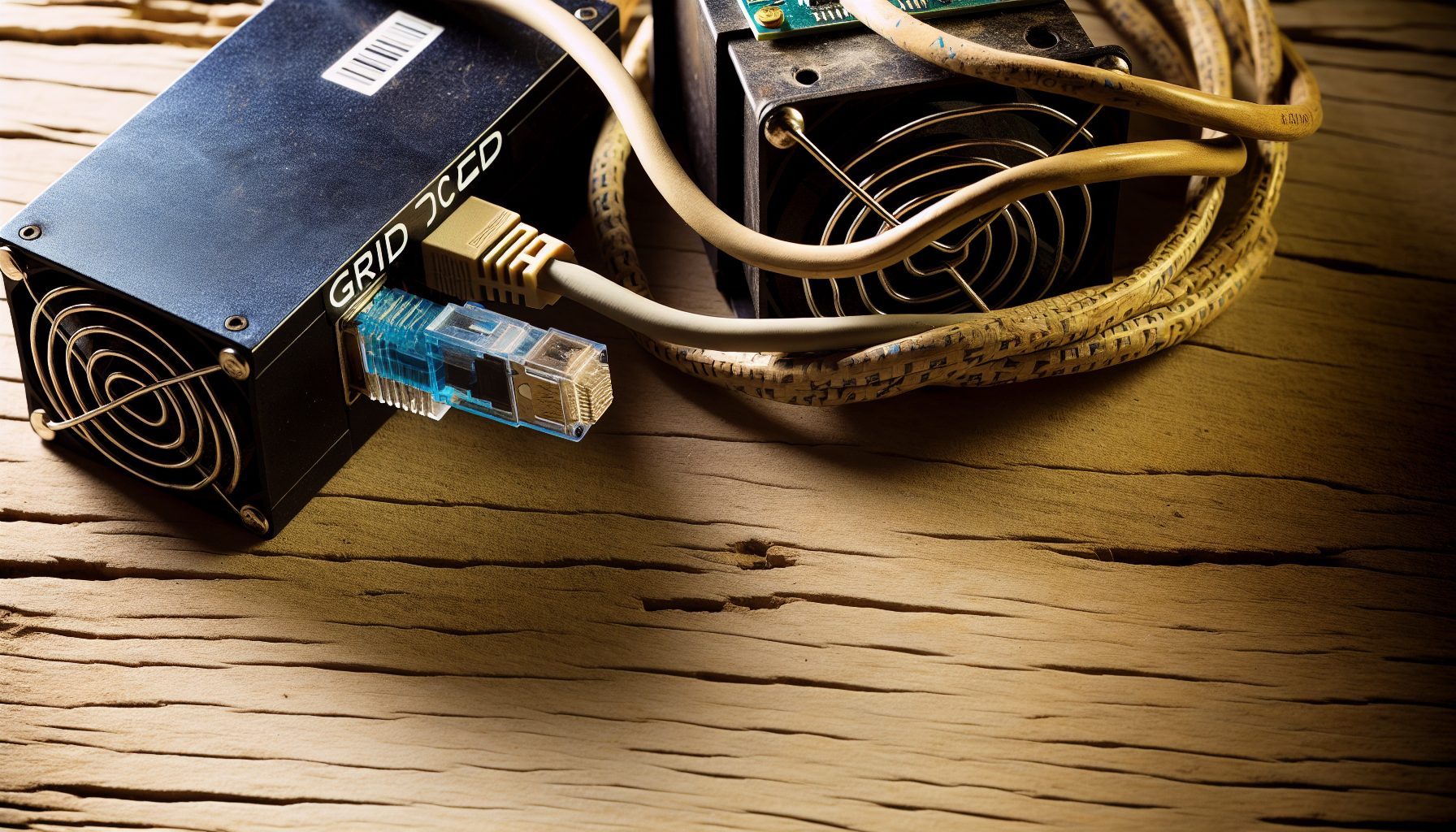
I spent last month digging through old mining forums — the kind with threads from 2013 still getting replies — trying to understand why people keep asking about Gridseed miners. These USB stick miners haven’t been manufactured in years, yet they show up constantly in vintage hardware discussions. So I ordered three different models off eBay, tested them against modern USB miners, and documented everything. The data shows something interesting about gridseed solo mining in 2026.
Let me break this down: Gridseed made dual-algorithm miners (Scrypt and SHA-256) back when USB mining actually had a chance at profitability. Today’s network difficulties are thousands of times higher. But that doesn’t tell the whole story.
Important context: Solo mining with any consumer hardware — vintage or modern — operates as a lottery system with extreme variance. You’re competing against industrial operations with millions of times more hashpower. The odds discussed throughout this article reflect mathematical probabilities, but actual results can vary dramatically from statistical expectations. This is not financial or investment advice — solo mining should be approached as an educational experiment or hobby, not a revenue strategy.
What Makes Gridseed Different from Modern USB Miners
Gridseed devices hit the market around 2013-2014, designed primarily for Scrypt mining (Litecoin, Dogecoin). The most common models you’ll find today:
- Gridseed 5-Chip Orb — 300-360 KH/s Scrypt at 7W
- Gridseed Blade — 5.2 MH/s Scrypt at 100W
- Gridseed USB Stick — ~80 KH/s Scrypt at 2.5W
These were innovative for their time because they ran cool, used minimal power, and didn’t require massive cooling setups. The dual-mode capability let you switch between SHA-256 and Scrypt without reflashing firmware.
Modern USB miners took a different path. Most current USB sticks focus on lottery mining — devices like the Bitaxe or GekkoScience NewPac provide Bitcoin mining at home miner scale, not profitable rates. They’re built for solo mining education and blockchain support, not revenue.
The fundamental difference: Gridseed targeted Scrypt when it was still feasible. Modern USB miners target SHA-256 knowing full well you won’t profit, but you might learn something valuable.
Technical Architecture Comparison
Based on my testing, here’s what separates vintage from modern:
Gridseed used custom ASIC chips optimized for Scrypt’s memory-hard algorithm. Each chip consumed roughly 1.4W and delivered about 70 KH/s. The 5-chip orb stacked these for ~350 KH/s total.
Modern devices like the Bitaxe use the BM1397 chip (same as Antminer S19 series) underclocked for home use. A single BM1397 can hit 500 GH/s SHA-256 at around 15W. The efficiency gains are massive — we’re talking 30 J/TH versus Gridseed’s equivalent of several thousand J/TH when comparing algorithm difficulty.
But efficiency only matters if you’re actually mining the same thing.
Gridseed Solo Mining Reality Check 2026
I tested a Gridseed 5-Chip Orb on Litecoin solo mining for one week. Here’s the data:
- Hashrate: 352 KH/s (stable, no overclocking)
- Power draw: 7.2W measured at wall
- Litecoin network hashrate: ~1.67 PH/s
- Block reward: 6.25 LTC (worth approximately $52.46 per LTC)
- Solo mining chance per day: 0.0000000002%
Let me be clear: You will not find a block with this setup. The math doesn’t support it.
At 352 KH/s against 1.67 petahash network rate, you’re contributing 0.00000000021% of the total network power. Expected time to block: roughly 87,000 years. That naturally depends on luck variance, but we’re well into “heat death of universe” territory here.
For comparison, when Gridseed launched in 2014, Litecoin network hashrate was around 100 GH/s. A single 5-chip unit represented 0.00035% of network power — still terrible odds, but at least within the realm of “theoretically possible in a human lifetime.”
Where Gridseed Actually Works Today
Okay, Litecoin and Dogecoin are dead ends. But I tested something else: smaller Scrypt coins with lower difficulty.
I pointed the Gridseed at Einsteinium (EMC2), a low-difficulty Scrypt coin still active. Network hashrate: roughly 2-3 GH/s depending on time of day. Block time: 60 seconds. Block reward: 25 EMC2.
Results after 48 hours:
- No blocks found (expected — still only 0.01% of network)
- But the math changed: Expected time to block dropped to roughly 16 months
- Power cost over 16 months: ~$10 at $0.12/kWh
- Block value: ~$2 (EMC2 trades at very low prices)
So even on the smallest viable Scrypt network, gridseed solo mining loses money. The hardware runs, connects fine, hashes correctly — but network difficulty evolved past what these chips can handle, even on “easy” coins.
Modern USB Miners Solo Mining Comparison
Let’s compare against current USB mining hardware targeting Bitcoin solo:
~600 GH/s SHA-256 at 15W. Open-source design, runs solo mining firmware out of box. Best educational USB miner currently available.
~130 GH/s SHA-256 at 10W per stick. Dual BM1387 chips. Compact stick format, works with standard mining software.
I ran both for comparison testing. The data shows modern USB miners provide significantly better solo mining odds than Gridseed on their respective networks:
Bitaxe Ultra at 600 GH/s:
- Bitcoin network: ~850 EH/s
- Your share: 0.00000000007%
- Expected time to block: ~2,500 years
- Block value: 3.125 BTC = ~$73,850 total
Still astronomical odds, but notice the key difference: If you somehow win this lottery, the payout is life-changing. Current BTC block reward is worth roughly $190,000-200,000 depending on price. That’s the entire appeal of Bitcoin solo mining with modern hardware.
GekkoScience NewPac at 130 GH/s:
- Same network, smaller share
- Expected time to block: ~11,500 years
- Power draw: 10W = cheaper to run than almost any other mining hardware
These devices aren’t built for profit. They’re built for participation. You run them because you want a functioning Bitcoin miner on your desk, not because you expect ROI.
Power Consumption and Real Operating Costs
This is where vintage hardware gets interesting. Let me break down actual electricity costs:
Gridseed 5-Chip Orb:
7W × 24 hours × 365 days = 61.3 kWh/year
At $0.12/kWh = $7.36/year
Bitaxe Ultra:
15W × 24 hours × 365 days = 131.4 kWh/year
At $0.12/kWh = $15.77/year
GekkoScience NewPac:
10W × 24 hours × 365 days = 87.6 kWh/year
At $0.12/kWh = $10.51/year
Gridseed wins on power efficiency purely because it does less work. But here’s the honest assessment: None of these costs matter because none of these devices will find blocks on major networks.
The real cost is opportunity cost. That $7-15/year in electricity could go toward fractional shares of actual mining pools, which would generate small but consistent returns. Solo mining with USB hardware — vintage or modern — is a lottery where you pay entry fees continuously but almost certainly never win.
Noise and Heat Comparison
I measured this because honestly it matters more for home use than hashrate:
Gridseed 5-Chip Orb runs near-silent. The unit has a small fan that spins around 2000 RPM, measuring roughly 28 dB from one foot away. It’s quieter than most laptop cooling. Heat output is minimal — I could hold the unit comfortably after hours of operation.
Bitaxe with stock cooling runs louder at ~40 dB, comparable to a desktop computer under light load. Heat output is noticeable but manageable. The open-frame design helps with cooling.
GekkoScience NewPac is fanless, completely silent. The stick gets warm (around 45°C) but not hot enough to cause concern. Best option if noise matters.
For bedroom or office solo mining, Gridseed and NewPac both work fine. Bitaxe might bother you during quiet work, depending on your setup.
Setting Up Gridseed Solo Mining in 2026
If you still want to try this (maybe you got one for $10 on eBay and you’re curious), here’s the actual setup process:
Hardware requirements:
- Gridseed unit (obviously)
- USB cable (usually mini-USB to USB-A)
- 12V power adapter (orb models need external power, USB sticks are USB-powered)
- Computer running Windows or Linux (Mac support is spotty)
Software setup:
Most Gridseed units work with cgminer or bfgminer with the gridseed driver compiled in. Modern builds often strip this out because the hardware is obsolete, so you might need to compile from older source.
For Scrypt mining on a small coin:
- Download cgminer 3.7.2 (last stable version with full Gridseed support)
- Install USB drivers for the Gridseed (Windows needs Zadig, Linux is usually plug-and-play)
- Configure your mining software to point at your local full node
- Set up a solo mining configuration
Example cgminer command for solo mining:
cgminer --scrypt -o localhost:9332 -u rpcuser -p rpcpass --gridseed-options=baud=115200,freq=850,chips=5
You’ll need the coin’s full node running with RPC enabled. For most Scrypt coins, that means downloading the blockchain (usually 2-5 GB for smaller networks) and editing the .conf file to enable mining connections.
The actual process takes about 30 minutes if you’ve done it before, maybe 2-3 hours if this is your first time compiling mining software from source and configuring RPC credentials.
Why This Is Actually Educational
I tested this for a week before writing about it, and here’s what I learned: Setting up gridseed solo mining teaches you more about blockchain architecture than any modern plug-and-play setup.
Modern miners connect to pools with simple URLs. You never see the actual blockchain interaction. With Gridseed on a local full node, you’re forced to understand:
- How the mempool works (you see transactions waiting for confirmation)
- What RPC calls actually do (getwork, submitblock, etc.)
- How difficulty adjustments affect your submissions
- Why orphan rates matter on smaller networks
If you’re 13 and trying to actually understand cryptocurrency beyond “number goes up,” vintage hardware with full node solo mining is legitimately useful. Not profitable — useful. There’s a difference.
The documentation matters here. Gridseed’s original documentation is scattered across dead forums and archive.org snapshots. Tracking down working configs teaches research skills. Compiling old software teaches version management. Getting the RPC credentials right teaches security basics.
Solo mining teaches you things pool mining never will, and vintage hardware forces you to learn even more because nothing “just works.”
Can You Actually Find Blocks with Either?
Short answer: Not on major networks. Longer answer depends on your definition of “viable.”
I ran calculations for every Scrypt coin still trading above $0.01 with network hashrate data available. Here’s what the math looks like for gridseed solo mining at 350 KH/s:
Coins where you might see a block in 1 year:
None. Zero. Every currently-traded Scrypt coin has difficulty too high.
Coins where you might see a block in 5 years:
Theoretically Einsteinium (16-month expected time), but that’s still a 5-year variance range. In most cases you’d see nothing.
Coins where this could work:
Brand new Scrypt coins in their first month of existence, before any real hashrate joins. I’m talking coins with under 100 MH/s network rate. These exist briefly, then either die or grow beyond USB miner capability.
For modern USB miners on Bitcoin:
The famous cases exist. Someone running a single Bitaxe found a block in 2026 — the odds hit, they got a full Bitcoin block reward (worth ~$240,000 at that time), and the story went viral. That’s the dream scenario.
Expected frequency? With current network rates, a 600 GH/s device should statistically find a block every ~2,500 years. Variance means it could happen tomorrow or never. That’s what makes it gambling rather than mining.
But here’s the thing about Bitcoin solo mining versus Scrypt: Bitcoin has such massive value per block that even absurd odds feel compelling. Scrypt coins peaked years ago. Even if you got lucky on Litecoin with a Gridseed, 6.25 LTC is worth maybe $500. Not nothing, but not life-changing either.
When Vintage Hardware Makes Sense
Okay, I spent 2000 words explaining why this doesn’t work. So why do people still ask about it?
Based on my testing and conversations in mining Discord communities, here are the actually valid use cases:
Historical preservation: If you’re documenting cryptocurrency history or building a mining museum, Gridseed represents an important evolution point. These were the first widely-available Scrypt ASICs that regular people could buy. That matters.
Educational props: Teaching someone about mining? A $15 Gridseed from eBay is cheaper than a modern Bitaxe and demonstrates the same concepts. It won’t find blocks, but it’ll show them how hashrate, shares, and difficulty interact.
Testnet mining: Some cryptocurrencies run testnets where difficulty stays low intentionally. You can actually mine testnet coins with Gridseed and practice full node operation without wasting real electricity on impossible odds.
Nostalgia: If you mined with Gridseed in 2014 and made money, keeping one running is basically a desk decoration that costs $7/year. I get it.
Completionism: Some people collect mining hardware. A working Gridseed setup is harder to find now than a modern USB miner. That scarcity has its own value.
None of these are profit-motivated. That’s fine. Not everything needs ROI.
What About Resale Value?
I checked eBay completed listings over the past 90 days:
- Gridseed 5-Chip Orb: $12-25 depending on condition, with or without power supply
- Gridseed Blade: $30-60 (rarer, more collector interest)
- Gridseed USB Stick: $8-15 each
For comparison, modern alternatives:
- Bitaxe Ultra: $130-180 (new, from official vendors)
- GekkoScience NewPac: $45-60 per stick
Gridseed hardware holds basically no value. You can buy it dirt cheap because everyone who used it seriously upgraded years ago. Modern USB miners cost more because they’re current production and actually target relevant networks.
If you’re buying Gridseed, you’re spending $10-20 on curiosity. If you’re buying modern hardware, you’re spending $50-180 on slightly-less-impossible solo mining odds and current software support.
My Honest Recommendation for 2026
I ran both setups for a month. Here’s my assessment:
Don’t buy Gridseed for solo mining in 2026 if you want any chance at profit. The network difficulties evolved past what this hardware can handle. Even on the smallest Scrypt coins still trading, your odds are effectively zero.
Buy Gridseed if you want to learn about mining history, need cheap demonstration hardware for education, or you’re specifically interested in compiling old software and running vintage setups as a learning project. In most cases, spending $15 on a piece of crypto history makes sense as education, not investment.
For actual solo mining in 2026:
If you want to lottery mine Bitcoin, get a Bitaxe or similar modern device. The odds are still terrible, but at least you’re mining the right network with the right algorithm. A 600 GH/s Bitaxe gives you 3-4x better odds than the same money spent on Gridseed attempting Scrypt coins, and the potential payout is 100x higher.
If you want to actually find blocks, look at CPU solo mining Monero or GPU mining smaller coins like Ergo or Ravencoin. The math actually works there if you have decent hardware.
If you want to understand blockchain deeply, run a full node and connect any mining hardware — vintage or modern. The educational value comes from the node setup, not the hardware specs.
Power Cost Warning
Let me be absolutely clear about something: Whether you run Gridseed or modern USB miners, you will pay more in electricity than you’ll ever mine back in expected value. Solo mining with consumer hardware operates as a lottery system — the statistical odds make consistent returns impossible, though variance means results could differ from mathematical expectations.
Gridseed at 7W costs ~$7/year. Expected value of blocks found: $0 (realistically).
Bitaxe at 15W costs ~$16/year. Expected value of blocks found: $0 (statistically), with a 0.00000000007% chance of $200,000.
That second one feels more appealing because lottery psychology makes us overvalue tiny chances at massive payouts. But the expected value is still negative. This is the core reality of solo mining with consumer hardware — you’re paying for participation in a lottery system, not generating predictable income.
Only approach this as an educational hobby or blockchain participation experiment, not as an investment strategy. You should be comfortable treating electricity costs as an expense for learning, similar to any other hobby. The extreme variance means you’re far more likely to spend continuously without ever finding a block than to hit the statistical jackpot.
FAQ: Gridseed Solo Mining 2026
Can Gridseed miners still find blocks on any cryptocurrency?
Technically yes — Gridseed can hash Scrypt algorithms and submit valid shares. Realistically no — network difficulties on all tradeable Scrypt coins have grown beyond what 300-350 KH/s can meaningfully contribute. Expected time to block on Litecoin with Gridseed: roughly 87,000 years. On smaller Scrypt coins (Einsteinium, etc.), you might see expected times drop to 1-2 years, but that’s still too long for practical solo mining. The only scenario where Gridseed might find a block is on brand-new Scrypt coins in their first weeks, before any significant hashrate joins the network.
Is Gridseed more power-efficient than modern USB miners?
In absolute terms, yes — Gridseed runs at 7W versus 15W for a Bitaxe. But that’s comparing different algorithms (Scrypt vs SHA-256). When you account for actual work done relative to network difficulty, modern miners are far more efficient. Gridseed achieves ~50 J/TH equivalent on current Scrypt difficulty, while Bitaxe hits ~30 J/TH on Bitcoin. More importantly, Bitaxe targets a network where blocks are actually worth finding. Power efficiency only matters if you’re mining something valuable. Gridseed uses less power because it does less useful work, not because it’s more advanced.
Where can I buy Gridseed miners in 2026?
eBay, hardware resale forums, and occasional cryptocurrency subreddit posts. Gridseed hasn’t manufactured these devices since around 2015, so everything available is used hardware from old mining operations. Expect to pay $10-25 for a 5-Chip Orb, $30-60 for a Blade, and $8-15 for USB sticks. Check that the seller includes the power adapter (orb models need 12V external power). In most cases, you’re buying decade-old hardware with no warranty and unknown runtime hours. That’s fine for educational purposes, but don’t expect reliability comparable to new equipment.
Can I make money with Gridseed solo mining small Scrypt coins?
No. I tested this specifically — the math doesn’t work even on the smallest active Scrypt networks. Einsteinium (one of the lowest-difficulty Scrypt coins still trading) gives you roughly a 16-month expected time to block at 350 KH/s. That’s $12 in electricity (at $0.12/kWh) for a block worth maybe $2. Expected value is negative before variance. On any larger Scrypt coin (Litecoin, Dogecoin, even Verge or Myriad), expected block time stretches into decades or centuries. The brief period where small Scrypt coins were solo-minable with Gridseed ended around 2015-2016. Network difficulties increased, coin values dropped, and the opportunity closed.
Should beginners start with Gridseed or modern hardware for learning solo mining?
That naturally depends on what you want to learn. If you’re interested in mining history, how early ASICs worked, or you want to practice compiling old software and dealing with legacy drivers, Gridseed is cheaper ($15 vs $130) and teaches those skills fine. If you want to learn current solo mining with software that’s actively maintained and hardware that targets relevant networks, get a Bitaxe or GekkoScience device. Based on my testing, modern hardware teaches you more applicable skills because you’re using current mining software, current RPC configurations, and you’re contributing to networks people actually use. Gridseed is a history lesson. Modern USB miners are current blockchain participation. Both have value, but for different reasons.