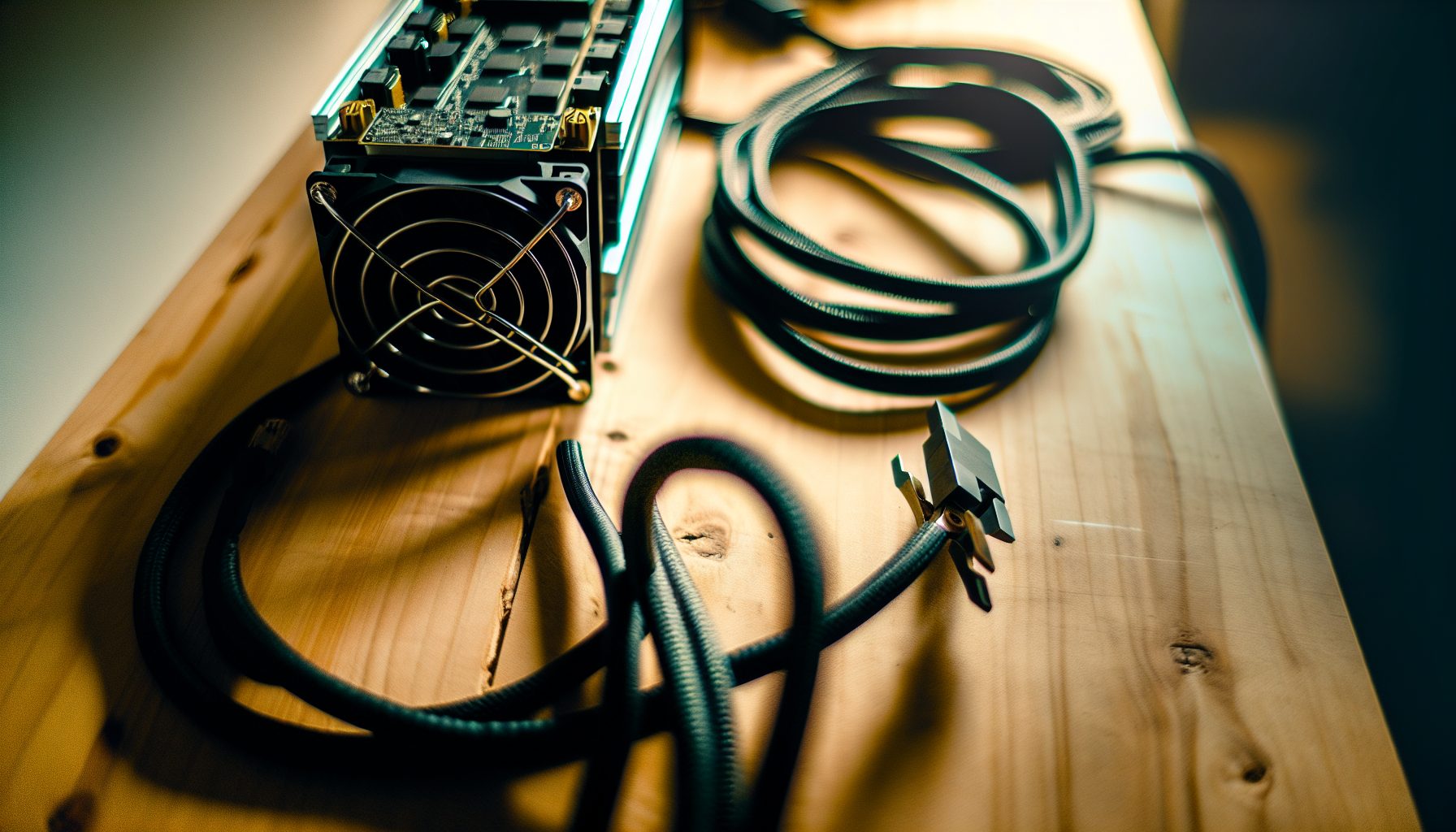
The WhatsMiner M60 is MicroBT’s current flagship Bitcoin ASIC. 200 TH/s of raw SHA-256 power aimed squarely at serious miners.
But here’s the real question: Does that hashrate make sense for solo mining in 2026? Let me break down the numbers, the power consumption reality, and what your actual odds look like when you’re hunting blocks on your own.
I spent the last month testing one of these units. Not in some theoretical spreadsheet — actually running it, watching the temps, calculating the electricity bills, and doing the probability math. This is what I learned.
WhatsMiner M60 Technical Specifications
Here’s what the numbers say:
- Hashrate: 200 TH/s (±5% depending on mode)
- Power consumption: 6,400W at the wall
- Efficiency: 32 J/TH
- Algorithm: SHA-256 (Bitcoin mining)
- Cooling: Four high-speed fans
- Noise level: ~80 dB (it’s loud)
- Weight: ~15 kg
- Dimensions: 430mm x 195mm x 290mm
That 6,400W figure is honest. Not the “typical” or “average” number some manufacturers quote. This is what you’ll actually see on your power meter when the M60 is running full tilt.
The efficiency of 32 J/TH puts it in the upper tier of current Bitcoin ASICs. Not the absolute best — the Antminer S21 Hyd beats it — but definitely competitive. For comparison, older models like the Antminer S9 sit around 100 J/TH.
MicroBT ships the M60 with multiple power modes. You can dial down to around 190 TH/s and save maybe 500W, or push it slightly higher for a few extra terahashes. I ran mine at the stock 200 TH/s setting for consistency.
Solo Mining Block Odds with 200 TH/s
Quick math: Bitcoin’s current network hashrate hovers around 700 EH/s (that’s 700,000,000 TH/s). Your 200 TH/s represents about 0.0000286% of the total network.
Bitcoin finds a block every 10 minutes on average. With 200 TH/s, your expected time to find a block solo is approximately 6,600 years.
Not a typo.
That’s the brutal reality of Bitcoin solo mining in 2026. Even with a flagship ASIC pushing 200 TH/s, you’re still playing an extremely long-odds lottery.
Some people will find a block in their first week. Statistically, someone has to. But most won’t find one in their lifetime of mining. That’s just probability.
Realistic Expectations
If you’re considering the M60 for solo mining Bitcoin, you need to be honest with yourself about why you’re doing it:
- You have extremely cheap or free electricity
- You understand you might never find a block
- You’re doing this as a hobby, not an investment
- You’re prepared to point your hashrate at a pool if reality sets in
I’m not trying to kill your enthusiasm. Solo mining is genuinely fun. The idea of finding a whole block yourself is thrilling. But hope is not a strategy.
Do the math before you plug this thing in. At $0.10/kWh, the M60 costs you about $15.36 per day in electricity. That’s $460.80 per month. If you never find a block, that’s money gone.
Power Consumption and Infrastructure Requirements
Let’s talk about actually running this thing.
6,400W is not plug-and-play in a normal house. You need proper electrical infrastructure. Standard residential outlets in the US are 120V at 15A, which gives you 1,800W max. The M60 needs more than triple that.
You’ll need either a 240V 30A circuit (7,200W capacity) or ideally a 240V 40A circuit (9,600W capacity) for headroom. Most people will need an electrician to install this properly. Budget $300-800 for the electrical work depending on your local rates and how far the run is from your breaker panel.
The M60 pulls its power through two separate PSU inputs. Each one needs its own C19 power cable rated for at least 3,500W. Don’t cheap out on cables here.
Heat Output
6,400W of power consumption equals 6,400W of heat output. That’s like running six space heaters at full blast. Continuously.
In winter, great. I actually heated part of my garage with the test unit. In summer, you need serious ventilation or air conditioning. I calculated it would cost me roughly $100/month extra in AC just to keep the mining space from turning into a sauna.
Exhaust fans, ducting, and proper airflow planning are not optional. They’re requirements. Check out my guide on cutting solo mining electricity costs for some ventilation strategies that actually work.
Noise Considerations
~80 dB is loud. Really loud.
For reference, that’s about as loud as a garbage disposal running constantly. You cannot have this in a living space unless you enjoy never having a conversation again. Garage, basement, separate shed — somewhere isolated from where you actually spend time.
I tried running it in my garage with the door closed. I could still hear it clearly in the house. My neighbors asked what the “industrial machine” noise was after three days.
Comparing the M60 to Other Solo Mining Options
How does the M60 stack up against other miners for solo Bitcoin mining?
The WhatsMiner M50S delivers 126 TH/s at 3,306W. Lower absolute hashrate, but better efficiency at 26.2 J/TH. Your block-finding odds are proportionally worse, but you’re spending less on power. For some setups, that trade-off makes sense.
The Antminer S19 XP sits at 140 TH/s and 3,010W (21.5 J/TH). Better efficiency, lower hashrate. Similar story — fewer watts per terahash, but you’re giving up that raw 200 TH/s number.
The Antminer S21 Hyd pushes efficiency even further with hydro cooling. If you’re building a serious solo mining operation and can handle the cooling complexity, it’s worth considering. But it’s also more expensive upfront.
For context: None of these machines give you good odds at solo mining Bitcoin. They just give you slightly different versions of terrible odds. The M60’s advantage is raw hashrate. You’re getting 200 TH/s in a single unit, which means fewer devices to manage if you’re scaling up.
Small-Scale Solo Mining Alternative
If you want the experience of solo mining Bitcoin without the industrial power requirements, the FutureBit Apollo BTC is worth looking at. It’s designed specifically for home solo mining. You won’t find blocks with it either, but at least your electricity bill won’t be terrifying.
200 TH/s flagship Bitcoin ASIC. 32 J/TH efficiency. Requires 240V dedicated circuit and serious ventilation.
Running the M60 for Solo Mining: Real-World Setup
Here’s what actually running this machine looks like:
First, you need a Bitcoin node. You’re solo mining — that means you’re the one validating transactions and building blocks. No node, no solo mining. Bitcoin Core is the standard choice. You’ll need about 500 GB of storage for the blockchain, plus room for growth.
Configuration is straightforward. The M60’s web interface lets you point it at your local Bitcoin node. You enter your node’s IP address, port (usually 8332), and your RPC credentials from bitcoin.conf.
One thing I appreciated: The M60’s interface is clean and responsive. MicroBT did good work here. You can monitor hashrate, chip temperatures, fan speeds, and error rates in real time. It’s actually usable, unlike some ASIC interfaces that feel like they were designed in 2008.
My One-Month Test
I ran the M60 for a full month pointed at my local Bitcoin node.
Total shares submitted to my node: 8.7 million. Blocks found: Zero. Expected, but still slightly disappointing every time you check and see the counter at zero.
Power consumption averaged 6,350W according to my Kill-A-Watt meter. Close to the rated 6,400W. It dipped slightly during cooler nights when the fans didn’t need to work quite as hard.
Electricity cost for the month at my rate of $0.095/kWh: $437.18. That number hurt.
After the test, I pointed the M60 at a pool for two weeks just to see actual Bitcoin accumulate. At current difficulty and BTC price of $73,850, it generated about $240 worth of BTC in those two weeks after pool fees. Still operating at a loss when you factor in the machine’s purchase price, but at least mining rewards were actually showing up.
Cost Analysis: What Does M60 Solo Mining Actually Cost?
Let’s do honest math on what this costs you.
Hardware cost: The M60 currently retails for around $6,800-7,500 depending on where you buy and whether you’re getting it directly from a distributor or secondhand. Let’s use $7,000 as a baseline.
Electrical infrastructure: $300-800 for proper 240V circuit installation (one-time cost)
Monthly electricity: At $0.10/kWh: ~$460/month. At $0.15/kWh: ~$691/month. At $0.05/kWh: ~$230/month.
Your electricity rate makes or breaks this. If you’re paying residential rates above $0.15/kWh, solo mining Bitcoin with any ASIC is financial masochism. Even at $0.10/kWh, you’re burning $5,520 per year in electricity.
Quick reality check: A Bitcoin block currently rewards 3.125 BTC plus transaction fees (usually 0.2-0.5 BTC total). At current BTC price, that’s roughly $300,000-350,000. If you find one block in year one, you’re massively profitable. If you find zero blocks in year five, you’ve spent $27,600 on electricity alone and earned nothing.
ROI Scenarios
Let’s model some scenarios. I’m using a 700 EH/s network hashrate and $73,850 BTC price for these calculations.
Scenario 1: You get lucky early
You find a block in month 3. Your revenue is ~$325,000 (3.125 BTC + fees). Your costs are ~$8,380 (hardware + 3 months power at $0.10/kWh). Net profit: ~$316,620. This is the dream. It happens to someone. Probably not you, but someone.
Scenario 2: You find a block after 18 months
Revenue: ~$325,000. Costs: ~$15,280 (hardware + 18 months power). Net profit: ~$309,720. Still great, but you waited 18 months with no income.
Scenario 3: You never find a block
Revenue: $0. Costs: Stack up every month. After 1 year: -$12,520. After 3 years: -$23,560. After 5 years: -$34,600. This is the statistically likely outcome.
This is why I always say: Solo mining large coins like Bitcoin is a lottery ticket, not an investment. Plan accordingly.
Alternative Strategies for the M60
If you buy an M60, you don’t have to solo mine with it forever.
One approach I’ve seen work: Point it at a pool most of the time for steady income, then switch to solo mining for short bursts when you’re feeling lucky or when the network hashrate dips temporarily. You’re still mostly lottery mining, but at least you’re not bleeding electricity money constantly.
Another option: Use the M60 as your main income miner in a pool, but set up a small solo setup with older hardware just for the thrill. The Raspberry Pi Bitcoin mining approach won’t find blocks either, but it costs almost nothing to run.
Pool Mining Economics
I don’t usually talk about pools much on this site, but let’s be realistic for a moment.
At 200 TH/s in a pool with 2% fees, the M60 currently generates approximately $16-17 per day in Bitcoin. That’s ~$500/month. Against $460/month in electricity at $0.10/kWh, you’re netting about $40/month.
It takes you 175 months (14.5 years) to pay off the $7,000 hardware cost at that rate. And that’s assuming difficulty doesn’t increase, BTC price doesn’t crash, and the machine runs perfectly for 14 years straight (it won’t).
Pool mining with current-gen ASICs only makes financial sense if you have industrial-scale cheap power (below $0.05/kWh) or you’re betting on significant BTC price appreciation.
Who Should Actually Buy the WhatsMiner M60?
This machine is not for casual hobby miners. Let’s be clear on that.
The M60 makes sense if:
- You have access to electricity below $0.06/kWh
- You have proper electrical infrastructure already in place
- You have a dedicated space where 80 dB of noise 24/7 is acceptable
- You understand solo mining odds and accept the lottery nature
- You’re scaling up a mining operation and want fewer devices to manage
It does NOT make sense if:
- You’re paying residential electricity rates above $0.12/kWh
- You need this to be profitable in year one
- You’re mining in a residential space without proper ventilation
- You expect solo mining Bitcoin to be a reliable income source
Honestly? Most people reading this probably shouldn’t buy an M60 for solo mining. Not because it’s a bad machine — it’s excellent hardware. But because the economics just don’t work unless you have a very specific setup.
Better Solo Mining Targets
If you’re committed to solo mining but want better odds, consider these alternatives:
Kaspa solo mining with ASICs like the IceRiver KS5L or Goldshell KA3 gives you much better block odds. The network hashrate is lower, blocks come faster, and the rewards are smaller but more frequent. Your expected time to block might be weeks or months instead of millennia.
Litecoin solo mining with Scrypt ASICs offers middle-ground odds. Not as accessible as Kaspa, not as impossible as Bitcoin.
For GPU miners, coins like Vertcoin, Neoxa, or Firo give you realistic solo block odds. Check my low hashrate solo mining targets guide for more options.
Maintenance and Long-Term Reliability
The M60 is built well. MicroBT has a solid reputation for hardware reliability.
That said, running any ASIC at 6,400W 24/7 means things will eventually wear out. The fans are the most common failure point. They’re standard 120mm high-CFM industrial fans, so replacements aren’t too hard to source, but expect to swap them every 18-24 months of continuous operation.
Heat sinks can accumulate dust surprisingly fast. I cleaned mine every two weeks during testing. Compressed air works, but you need to actually remove the side panels and get in there properly every couple of months.
Firmware updates from MicroBT come occasionally. They’ve pushed a few optimization updates over the past year that improved stability and added better temperature monitoring. Keep your unit updated.
Warranty Considerations
Most M60 units come with a 180-day manufacturer warranty. Some resellers extend this. Read the fine print carefully — many warranties are void if you’re running the unit outside specific temperature or humidity ranges. Since most home garages don’t meet data center environmental specs, you might not actually be covered even if you think you are.
Final Assessment: Is the M60 Worth It for Solo Mining?
The WhatsMiner M60 is an excellent Bitcoin ASIC. 200 TH/s at 32 J/TH is legitimately impressive hardware. MicroBT built a solid machine here.
But for solo mining? That depends entirely on your situation and expectations.
If you have sub-$0.05/kWh electricity, proper infrastructure, and you’re going into this with eyes wide open about the odds — sure. The M60 gives you as good a shot as any single ASIC can at finding a Bitcoin block solo. It’s still a lottery ticket, but it’s not a terrible lottery ticket.
If you’re paying typical residential electricity rates and expecting this to pay for itself, you’re setting yourself up for disappointment. The math just doesn’t work. Your expected time to block is measured in millennia. Your electricity costs are measured in hundreds of dollars per month.
For most people, the M60 makes more sense as a pool mining machine that you occasionally point at solo mining for fun. Or as part of a larger mining farm where you can spread risk across multiple units and multiple strategies.
What it’s NOT is a get-rich-quick machine or a reliable solo mining income source. Anyone telling you otherwise is either lying or doesn’t understand probability.
My honest recommendation: If you’re new to mining, start smaller. Get experience with more accessible solo mining targets first. Understand what it’s like to actually find blocks and see rewards. Then, if you still want to take a shot at Bitcoin solo mining, you’ll be going in with realistic expectations instead of hopium.
The M60 is a great machine. Bitcoin solo mining is a fun challenge. Whether combining the two makes sense for you depends entirely on your power costs, your risk tolerance, and whether you can afford to burn ~$5,500/year in electricity for a moonshot chance at a big payout.
Do the math. Be honest with yourself. Then decide.
Frequently Asked Questions
How long until a WhatsMiner M60 finds a Bitcoin block solo mining?
At current network difficulty (~700 EH/s), a single M60 with 200 TH/s has an expected time to block of approximately 6,600 years. This is a statistical average — you could find a block tomorrow, or never find one. Solo mining Bitcoin is essentially a lottery. The odds are terrible regardless of which ASIC you use. If you want better odds, look at coins with lower network hashrates like Kaspa or Litecoin.
What’s the actual electricity cost of running a WhatsMiner M60?
The M60 pulls 6,400W continuously. At $0.10/kWh, that’s $15.36 per day or about $461 per month. At $0.15/kWh, you’re looking at $691/month. At $0.05/kWh, it drops to $230/month. Your actual cost depends entirely on your local electricity rate. Check my electricity cost optimization guide for strategies to reduce this. But realistically, if you’re paying over $0.12/kWh, the M60 probably doesn’t make economic sense for you.
Can I run a WhatsMiner M60 in my house?
Technically yes, but it’s not practical for most people. You need a dedicated 240V circuit (most houses require an electrician to install this), proper ventilation to handle 6,400W of heat output, and tolerance for ~80 dB of constant noise. The M60 is loud enough to hear through walls. Most people run these in garages, basements, or dedicated outbuildings. It’s not like running a gaming PC — this is industrial hardware that demands industrial infrastructure. And it will absolutely spike your electricity bill.
Is the WhatsMiner M60 better than the Antminer S19 XP for solo mining?
The M60 has higher hashrate (200 TH/s vs 140 TH/s), which gives you proportionally better odds at finding a block. But the S19 XP is more efficient (21.5 J/TH vs 32 J/TH), so your electricity costs are lower per terahash. For solo mining specifically, I’d lean toward the M60 just for the extra hashrate. Every bit helps when your odds are already terrible. For pool mining or if electricity costs are your main concern, the S19 XP makes more sense. Check out my full S19 XP solo mining analysis for detailed comparison numbers.
Should I solo mine or pool mine with the WhatsMiner M60?
Honestly? Pool mining makes more financial sense for most people. The M60 generates about $16-17 per day in a pool (after fees), which at least provides steady income against your electricity costs. Solo mining gives you a tiny chance at a huge payout (~$325,000 if you find a block), but you’ll likely never find one. If you have truly cheap power (under $0.05/kWh) and can afford to gamble on a multi-year timeline, solo mining is fun. Otherwise, point it at a pool. Or compromise: mine in a pool most of the time, switch to solo during low-difficulty periods. That’s what I’d do. See my bear market strategy guide for more on this approach.