The Antminer S9 in 2026: Outdated or Underrated for Solo Mining?
Look, I’m gonna be straight with you. The Antminer S9 is basically ancient in crypto years. We’re talking about a miner that launched back in 2016. That’s like… a decade ago. But here’s the thing that got me curious: I keep seeing people on Reddit and Discord talking about running S9s for solo mining in 2026, and I wanted to figure out if they’re crazy or if there’s actually something to it.
Real talk: If you’re thinking about solo mining Bitcoin with an S9 in 2026, you need to understand the math. And honestly? The math is pretty brutal. But that doesn’t mean the S9 is completely useless for solo mining — you just need to get creative about which coins you point it at.
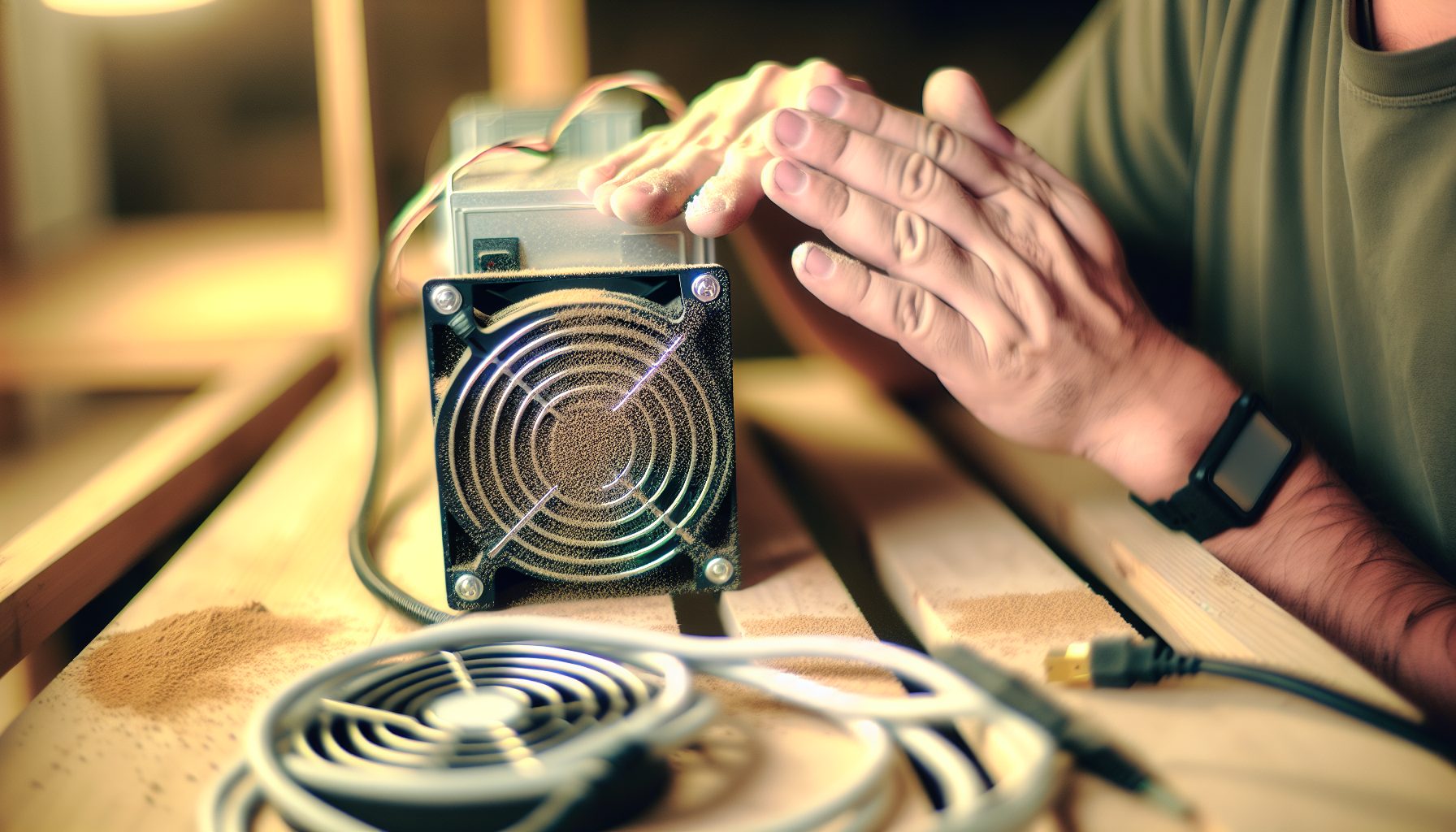
I actually got my hands on a used S9 last year for like $50 at a local mining farm liquidation sale. The thing was dusty, loud as heck, and the previous owner said it “probably still works.” Spoiler: it did work, but my electricity bill was NOT happy about it. That experience taught me a lot about what makes sense for solo mining with old hardware and what’s just… burning money for false hope.
Solo Mining Bitcoin with Antminer S9: The Harsh Reality
The Antminer S9 delivers around 13-14 TH/s depending on the model and how well you’ve maintained it. It pulls roughly 1,300-1,400W from the wall. By 2026 standards, that’s like bringing a bicycle to a Formula 1 race.
Current Bitcoin network hashrate in 2026 is absolutely insane compared to when the S9 launched. We’re talking hundreds of exahashes. Your 14 TH/s is a drop in an ocean. Actually, it’s more like a single water molecule in an ocean.
Let me show you the block probability math. With 14 TH/s on the Bitcoin network, your chances of finding a block are roughly 1 in 15,000,000 per day. That means statistically, you’d find a block once every 41,000 years or so. No joke: you have better odds of getting struck by lightning while holding a winning lottery ticket.
The Bitcoin block reward in 2026 is 3.125 BTC after the 2026 halving. Current BTC price: $73,850. Even if that sounds tempting, remember those 41,000 year odds. Your electricity costs would run you into bankruptcy long before you saw a single satoshi from a solo block.
At $0.10/kWh (which is honestly pretty cheap in most places), you’re paying about $3.12 per day just to run this thing. That’s $95 per month. Over a year? $1,140 in electricity costs for hardware that statistically won’t find you a Bitcoin block in your lifetime.
If you’re serious about solo mining Bitcoin, check out our guides on modern hardware like the Antminer S21 Hyd or the Whatsminer M50S. Those machines actually give you realistic odds.
Alternative Coins for Antminer S9 Solo Mining in 2026
Okay, so Bitcoin solo mining with an S9 is basically dead. But the S9 uses the SHA-256 algorithm, and Bitcoin isn’t the only SHA-256 coin out there. This is where things get more interesting.
Here’s the strategy: find SHA-256 coins with much lower network hashrates where your 14 TH/s actually means something. Sure, these coins aren’t worth as much as Bitcoin, but finding blocks regularly beats never finding blocks at all.
Bitcoin Cash (BCH) Solo Mining
Bitcoin Cash runs on SHA-256, which means your S9 can mine it without any modifications. The BCH network hashrate is significantly lower than Bitcoin — usually around 2-4% of Bitcoin’s hashrate.
Current BCH price: $73,850… wait, that’s not right. Unfortunately we don’t have a live BCH price tracker, but as of early 2026, BCH typically trades around $200-400 depending on market conditions.
Your odds improve dramatically compared to Bitcoin, but we’re still talking maybe 1 block every few years with 14 TH/s. Better than 41,000 years, sure. But you’re still playing a really long lottery game. The block reward is 3.125 BCH per block after their halving cycle.
Bitcoin SV (BSV) Solo Mining
Bitcoin SV is another SHA-256 fork with even lower hashrate than BCH in most cases. Network hashrate fluctuates a lot, but it’s generally lower than Bitcoin Cash.
I honestly have mixed feelings about BSV. The community is… let’s say “polarizing.” But from a pure solo mining math perspective, the lower hashrate means better block odds. Block reward is 6.25 BSV as of 2026.
Something I learned the hard way: just because you CAN mine a coin doesn’t mean you SHOULD. Always check if exchanges actually list it and if there’s trading volume. Finding a block on a dead coin that no one will buy from you is the worst feeling.
Stay Away From: Unknown SHA-256 Forks
Trust me on this: there are dozens of obscure SHA-256 coins with tiny network hashrates where your S9 would find blocks daily. Sounds amazing, right?
Wrong.
Most of these coins are completely dead. Zero exchange listings, zero community, zero value. I once mined 50 blocks of some random Bitcoin fork over a weekend and couldn’t sell a single coin. Not even on sketchy DEXs. That’s 4 kWh of electricity wasted on digital nothing.
If a coin isn’t listed on at least one reputable exchange (Binance, Coinbase, Kraken, KuCoin, etc.), don’t waste your electricity on it. Period.
Electricity Cost Reality Check for Solo Mining Antminer S9
Let’s talk about the elephant in the room: power consumption. Before diving into any solo mining operation with an S9, understand that electricity represents a significant ongoing expense — typically your largest recurring cost by far. The S9 is incredibly inefficient by 2026 standards, and these power costs will directly impact whether solo mining makes any economic sense for your situation.
Modern ASICs like the S21 series achieve around 17-20 J/TH efficiency. The S9? It runs at approximately 100+ J/TH. That’s roughly 5-6 times less efficient. For the same amount of electricity, you could run much more powerful hardware.
Here’s a breakdown of S9 electricity costs at different rates:
- $0.05/kWh: $1.56/day, $46.80/month, $561.60/year
- $0.10/kWh: $3.12/day, $93.60/month, $1,123.20/year
- $0.15/kWh: $4.68/day, $140.40/month, $1,684.80/year
- $0.20/kWh: $6.24/day, $187.20/month, $2,246.40/year
If you’re paying more than $0.10/kWh, solo mining with an S9 honestly doesn’t make sense at all. Even at $0.05/kWh, you need to be realistic about block probabilities versus electricity costs.
For more strategies on reducing power costs, check out our guide on solo mining electricity cost optimization.
My Honest Take: When Does S9 Solo Mining Make Sense?
Okay, after running an S9 myself and doing all this math, here’s when I think solo mining with an Antminer S9 actually makes sense in 2026:
Scenario 1: Free or Near-Free Electricity
If you have access to solar power that would otherwise go to waste, or you’re in a situation with included electricity (dorm room, certain rental agreements — though check your contract first!), the equation changes completely.
With free electricity, your only costs are hardware acquisition and cooling. A $50-100 used S9 becomes a lottery ticket that costs you nothing to keep running. Will you win? Probably not. But at least you’re not bleeding money every month waiting for that golden block.
Scenario 2: Learning and Experimentation
This is actually why I got my S9. I wanted to learn how ASIC mining works without spending $5,000+ on modern hardware. The S9 taught me about:
- Overclocking and undervolting ASICs
- Cooling and noise management (seriously, these things are LOUD)
- Solo mining software configuration
- Pool vs solo mining comparisons
- SHA-256 algorithm behavior
As an educational tool for a kid on a budget? The S9 is actually pretty great. Just don’t expect to make money from it.
Scenario 3: You Want the Absolute Smallest Chance at a Big Win
Some people treat solo mining like buying a lottery ticket. They know the odds suck, but they love the idea that MAYBE, just maybe, they’ll hit that block and wake up to 3.125 BTC in their wallet.
If that’s your mindset and you can afford the electricity costs without it hurting your budget, go for it. Just be honest with yourself that this is entertainment/gambling, not an investment strategy.
When It Doesn’t Make Sense (Most Cases)
If you’re paying normal electricity rates ($0.10+/kWh) and you’re hoping to make profit from solo mining Bitcoin with an S9, I’m sorry but you’re going to lose money. The math just doesn’t work.
You’d be better off:
- Buying Bitcoin directly with the money you’d spend on electricity
- Pool mining with the S9 for tiny but consistent returns
- Saving up for modern hardware with actual solo mining odds
- Exploring alternative coins for low hashrate solo mining
Solo Mining Setup: Getting Your S9 Running in 2026
If you’ve decided to go ahead with S9 solo mining despite the odds (respect for the determination), here’s how to set it up properly.
Hardware You’ll Need
Beyond the S9 itself, make sure you have:
The official power supply for the S9. Delivers 1,600W and actually handles the power spikes. Don’t cheap out on the PSU — fire hazards are real.
Stable wired connection is essential for solo mining. WiFi adapters add latency and potential disconnection issues.
The S9 runs HOT. Extra cooling extends its lifespan and prevents thermal throttling that reduces your hashrate.
Software Configuration
For Bitcoin solo mining, you’ll need to run Bitcoin Core with the full blockchain. This is like 500+ GB of data, so make sure you have the storage space.
Once Bitcoin Core is synced (which takes forever on the first run), you’ll configure your S9 to point at your local node. The miner interface is accessed through a web browser at the S9’s IP address.
Honestly, if you’re new to this, check out our Raspberry Pi Bitcoin mining guide for understanding the basic node setup concepts. Same principles apply but scaled up.
For alternative coins like Bitcoin Cash, you’ll need to run their respective node software. Each coin has its own blockchain to sync and maintain.
Pool-Assisted Solo Mining
Here’s a middle ground option: some pools offer solo mining services where they handle the node infrastructure and you just point your miners at their servers. You still get the full block reward if you find a block, but they take a small fee.
Check out Public-Pool.io which supports solo mining for multiple SHA-256 coins. Their fee is around 1-2%, which honestly beats the hassle of running your own full nodes for multiple blockchains.
Comparing S9 to Modern Solo Mining Options
Let me show you how badly outclassed the S9 is by 2026 hardware. This isn’t meant to be mean to the S9 — it was revolutionary in its time. But context matters.
Antminer S9 vs S19 XP
The Antminer S19 XP delivers 140 TH/s at around 3,010W. That’s 10x the hashrate of an S9 for only about 2.3x the power consumption.
To match one S19 XP’s hashrate, you’d need 10 S9s consuming about 14,000W total. That’s 4.6x more power for the same mining output. The inefficiency is insane.
Antminer S9 vs Budget Modern Options
Even budget 2026 ASICs like the FutureBit Apollo BTC offer better efficiency despite lower hashrate. The Apollo does about 3-4 TH/s at only 200W.
Sure, that’s lower hashrate than an S9. But the efficiency is SO much better that in many electricity markets, the Apollo makes more sense for small-scale mining.
What About Alternative Algorithm Miners?
If you’re open to mining coins besides SHA-256, you have way better solo mining options in 2026:
- Kaspa ASICs: The Goldshell KA3 or IceRiver KS5L offer much better block odds on Kaspa’s lower-difficulty network
- Litecoin miners: Scrypt ASICs targeting Litecoin give you better efficiency and block probability
- GPU mining: Coins like Kaspa, Vertcoin, or Neoxa can be solo mined with gaming GPUs
For comprehensive profitability comparison across different coins, check out our Bitcoin vs Litecoin vs Kaspa solo mining analysis.
Should You Buy an Antminer S9 for Solo Mining in 2026?
Alright, final verdict time. Should you actually buy an Antminer S9 for solo mining in 2026?
No, if:
- You’re paying more than $0.10/kWh for electricity
- You expect to make profit from it
- You want realistic chances at finding Bitcoin blocks
- You’re trying to build a serious mining operation
- You live somewhere with noise restrictions (these things sound like jet engines)
- You don’t have proper cooling and ventilation
Maybe, if:
- You have free or extremely cheap electricity (under $0.05/kWh)
- You want to learn ASIC mining on cheap hardware before upgrading
- You’re targeting alternative SHA-256 coins with lower difficulty
- You understand it’s basically a lottery ticket with terrible odds
- You can get one for under $100 used
Definitely no if:
- Someone is trying to sell you an S9 for more than $150 in 2026
- You’re told this will make you “passive income”
- Anyone guarantees you’ll find blocks
Better Alternatives Worth Considering
If you’re dead set on solo mining but the S9 doesn’t make sense for your situation, consider these instead:
For Bitcoin solo mining: Save up for at least an S19 series miner or newer. Yes, it’s expensive. But your block odds improve dramatically enough to maybe justify the investment over a lifetime of running S9s that never find blocks.
For budget solo mining: Look at alternative coins with lower network difficulty. The solo mining probability chart shows which coins give you realistic odds at different hashrate levels.
For learning: Get a Raspberry Pi mining setup or NerdMiner. You won’t find blocks, but you’ll learn the fundamentals without the massive electricity costs.
For actually making money: Pool mine with whatever hardware you can afford, or just buy crypto directly. DCA (dollar-cost averaging) into Bitcoin with the money you’d spend on electricity often outperforms mining with obsolete hardware.
Frequently Asked Questions
Can an Antminer S9 find a Bitcoin block in 2026?
Technically yes, but the probability is extremely low. With about 14 TH/s against Bitcoin’s current network hashrate, you’d statistically find a block once every 41,000 years. Some people do get lucky with solo mining, but expecting to hit a block with an S9 is like expecting to win the lottery — possible but not something you should count on financially.
How much can I earn solo mining with an Antminer S9?
In most cases: nothing. The electricity costs will exceed any realistic mining returns. At $0.10/kWh, you’ll spend roughly $95/month in electricity. For Bitcoin solo mining, your expected earnings are essentially zero because block probability is so low. If you’re lucky enough to find a block (3.125 BTC), you’d be looking at over $100,000 based on current prices, but statistically this won’t happen in your lifetime. Alternative SHA-256 coins with lower difficulty might offer block rewards of $50-500, but you’d still typically spend years between blocks.
What’s a top coin to solo mine with an Antminer S9 in 2026?
Bitcoin Cash (BCH) or Bitcoin SV (BSV) offer better block odds than Bitcoin due to lower network hashrates, though you’re still looking at potentially years between blocks with 14 TH/s. Make sure whichever coin you choose is actually listed on exchanges so you can sell it if you do find a block. Avoid obscure SHA-256 forks with no exchange listings, even if their difficulty seems attractive — finding blocks on coins you can’t sell is pointless.
Is it worth running an Antminer S9 with free electricity?
With genuinely free electricity, an S9 becomes more interesting as a “lottery ticket” for solo mining. You’re only investing the initial hardware cost ($50-100 used) plus cooling, not ongoing electricity expenses. This changes the risk/reward calculation significantly. It’s still a long shot for finding blocks, but at least you’re not losing money monthly while you wait. Just manage your expectations and treat any block you find as a lucky bonus, not expected income.
Can I overclock an Antminer S9 for better solo mining odds?
You can overclock an S9 to squeeze out maybe 15-16 TH/s instead of 14 TH/s, but it comes with significantly increased power consumption and heat generation. This rarely makes sense for solo mining because the modest hashrate increase barely improves your block odds while substantially raising electricity costs. Instead, undervolting might make more sense — you sacrifice a bit of hashrate but improve efficiency, lowering your daily operating costs while you wait for that unlikely solo block. Either way, the modifications won’t fundamentally change whether S9 solo mining makes economic sense.
Final Thoughts: The S9 in 2026 Solo Mining Context
The Antminer S9 was a game-changer when it launched. It was THE miner everyone wanted. But crypto mining moves fast, and hardware ages faster.
In 2026, the S9 is basically a piece of mining history. It can still hash away at SHA-256 problems, but expecting it to compete in modern solo mining is like expecting a rotary phone to run TikTok. Technically it’s still a phone, but… you know what I mean.
That said, I don’t regret buying mine for $50. It taught me a lot about ASIC mining, hardware management, and the brutal math of solo mining. Those lessons were worth the electricity I spent running it for a few months.
If you’re in a similar situation — curious about mining, on a budget, wanting to learn — an S9 might be an okay educational purchase. Just go in with realistic expectations. You’re not going to get rich. You probably won’t find a Bitcoin block. But you might learn enough to make smarter decisions about future mining investments.
And hey, there’s something kinda cool about running a piece of mining history, even if it’s not profitable anymore. Just… maybe don’t quit your day job based on S9 solo mining dreams.
For those serious about solo mining in 2026, focus on modern hardware with realistic block odds, or explore alternative coins where lower network hashrates actually give you a fighting chance. Check out our bear market strategy guide for long-term thinking about solo mining investments, regardless of which hardware you choose.
Stay realistic, manage your expectations, and happy mining!